
In today’s digital age, cybersecurity has become one of the most critical concerns for businesses, governments, and individuals alike. As cyber threats continue to evolve and grow more sophisticated, the demand for skilled professionals who can defend against these attacks has skyrocketed. This is where ethical hacking comes into play—a legitimate and increasingly essential career path that combines technical expertise with problem-solving skills to protect digital assets.

If you’re curious about ethical hacking and want to understand what it takes to become one, you’ve come to the right place. This comprehensive guide will walk you through everything you need to know to start your journey in this exciting field.
What is Ethical Hacking?
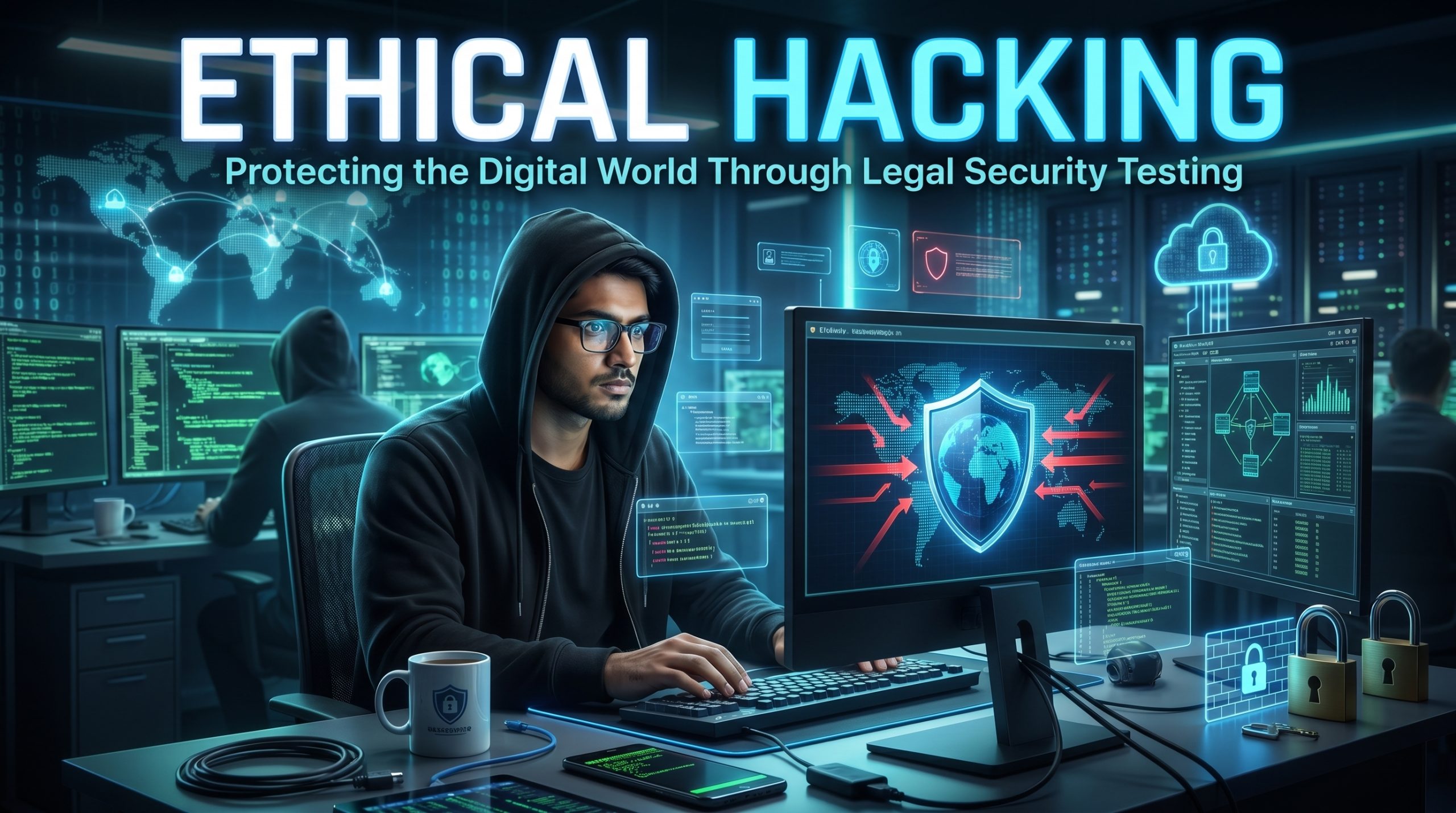
Ethical hacking, also known as penetration testing or white-hat hacking, is the practice of intentionally probing computer systems, networks, and applications to find security vulnerabilities before malicious hackers can exploit them. Unlike cybercriminals who break into systems for personal gain or malicious intent, ethical hackers are authorized professionals who work to strengthen security defenses.
Think of ethical hackers as digital locksmiths. Just as a locksmith tests the security of physical locks to ensure they’re properly protecting a property, ethical hackers test digital security measures to identify weaknesses that need to be addressed. They operate with explicit permission from the organization they’re testing and work within legal and ethical boundaries.
The key distinction between ethical hackers and malicious hackers lies in three fundamental principles:
Authorization: Ethical hackers always obtain written permission before testing any system. They work under clear contracts that define the scope and limitations of their testing activities.
Intent: The goal is always to improve security, not to cause harm, steal data, or disrupt services. Ethical hackers report their findings responsibly to the organization so vulnerabilities can be fixed.
Transparency: Ethical hackers document their methods and findings thoroughly, providing detailed reports that help organizations understand their security posture and make informed decisions about improvements.
Why is Ethical Hacking Important?
The importance of ethical hacking cannot be overstated in our interconnected world. Here’s why this field has become so crucial:
Rising Cyber Threats: Cyberattacks are becoming more frequent and sophisticated. Data breaches, ransomware attacks, and identity theft cost businesses billions of dollars annually. Ethical hackers help organizations stay one step ahead of cybercriminals by identifying vulnerabilities before they can be exploited.
Regulatory Compliance: Many industries are subject to strict data protection regulations such as GDPR, HIPAA, and PCI DSS. Ethical hacking helps organizations meet these compliance requirements by ensuring their security measures are adequate.
Protecting Sensitive Information: From personal customer data to intellectual property and financial information, organizations handle vast amounts of sensitive data. Ethical hackers help ensure this information remains secure.
Building Trust: In an era where data breaches make headlines regularly, demonstrating robust security practices builds customer trust and protects brand reputation.
Cost-Effective Security: Identifying and fixing vulnerabilities before they’re exploited is far less expensive than dealing with the aftermath of a successful cyberattack, which can include legal fees, regulatory fines, remediation costs, and lost business.
Essential Skills for Aspiring Ethical Hackers
Becoming a successful ethical hacker requires a diverse skill set that combines technical knowledge, analytical thinking, and continuous learning. Here are the fundamental skills you’ll need to develop:
Technical Skills
Networking Fundamentals: Understanding how networks operate is crucial. You need to grasp concepts like TCP/IP protocols, DNS, HTTP/HTTPS, firewalls, routers, and switches. This knowledge forms the foundation for understanding how data moves through systems and where vulnerabilities might exist.
Operating Systems: Proficiency in multiple operating systems is essential. Linux is particularly important in the ethical hacking world, as many security tools run on Linux distributions like Kali Linux and Parrot Security OS. You should also be comfortable with Windows and understand its security architecture.
Programming and Scripting: While you don’t need to be a software developer, understanding programming languages helps immensely. Python is especially valuable due to its versatility and the abundance of security-related libraries. Other useful languages include JavaScript, SQL, Bash, and PowerShell.
Web Technologies: Since many vulnerabilities exist in web applications, you need to understand how websites work. This includes knowledge of HTML, CSS, JavaScript, databases, and common web application frameworks.
Security Concepts: Familiarize yourself with core security principles like encryption, authentication, authorization, and common vulnerability types such as SQL injection, cross-site scripting (XSS), and buffer overflows.
Soft Skills
Problem-Solving: Ethical hacking is essentially advanced problem-solving. You need to think creatively, approach challenges from multiple angles, and persist when faced with complex security puzzles.
Attention to Detail: Security vulnerabilities often hide in small details. A keen eye for spotting anomalies and inconsistencies is invaluable.
Ethical Mindset: You’ll have access to sensitive systems and information. Maintaining strong ethical standards and professionalism is non-negotiable.
Communication: You need to explain technical findings to non-technical stakeholders. Clear, concise communication helps ensure your discoveries lead to meaningful security improvements.
Continuous Learning: The cybersecurity landscape evolves rapidly. Successful ethical hackers are committed to ongoing education and staying current with emerging threats and technologies.
Getting Started: Your Learning Roadmap
Beginning your journey in ethical hacking can feel overwhelming, but breaking it down into manageable steps makes it achievable. Here’s a practical roadmap to guide your learning:
Phase 1: Build Your Foundation (3-6 months)
Start with the basics of computer science and networking. You don’t need a formal degree, but understanding fundamental concepts is crucial.
Learn Networking Basics: Study the OSI model, common protocols, and how data flows through networks. Free resources like Professor Messer’s Network+ course provide excellent starting points.
Get Comfortable with Linux: Install a Linux distribution (Ubuntu is beginner-friendly) and use it as your primary operating system. Learn command-line navigation, file systems, and basic shell scripting.
Practice Programming: Start with Python, as it’s beginner-friendly and widely used in security tools. Work through tutorials, build simple projects, and understand core programming concepts.
Study Basic Security Concepts: Read introductory cybersecurity books and complete free online courses to understand encryption, authentication, and common attack vectors.
Phase 2: Introduction to Ethical Hacking (6-12 months)
Once you have a solid foundation, begin focusing specifically on ethical hacking techniques and tools.
Set Up Your Lab Environment: Create a safe, legal practice environment using virtual machines. Install Kali Linux and set up vulnerable systems like Metasploitable or DVWA (Damn Vulnerable Web Application) for practice.
Learn Common Tools: Familiarize yourself with essential hacking tools like Nmap (network scanning), Wireshark (packet analysis), Metasploit (exploitation framework), Burp Suite (web application testing), and John the Ripper (password cracking).
Study Web Application Security: Understand the OWASP Top 10 vulnerabilities and practice identifying them in controlled environments. Work through platforms like PortSwigger Web Security Academy or OWASP WebGoat.
Practice on Legal Platforms: Use platforms like HackTheBox, TryHackMe, PentesterLab, or VulnHub to practice your skills legally. These provide real-world scenarios in safe, authorized environments.
Phase 3: Advanced Skills and Specialization (Ongoing)
As you gain experience, you can specialize in areas that interest you most.
Choose Your Focus: Ethical hacking has many specializations including web application testing, network penetration testing, mobile security, cloud security, IoT security, or social engineering.
Pursue Certifications: Consider industry-recognized certifications like CompTIA Security+, Certified Ethical Hacker (CEH), Offensive Security Certified Professional (OSCP), or GIAC Security Essentials (GSEC).
Participate in Bug Bounty Programs: Once confident in your skills, try finding vulnerabilities in real applications through platforms like HackerOne, Bugcrowd, or Synack. This provides practical experience and potential income.
Contribute to the Community: Share your knowledge through blog posts, YouTube videos, or open-source projects. Teaching others reinforces your own learning.
Essential Tools Every Beginner Should Know
While ethical hacking involves dozens of specialized tools, here are the essential ones every beginner should become familiar with:
Nmap: A powerful network scanner that helps you discover hosts and services on a network. It’s often the first tool used in reconnaissance.
Wireshark: A packet analyzer that lets you capture and examine network traffic in detail, helping you understand what’s happening on the network.
Metasploit: A comprehensive framework for developing and executing exploit code against target systems. It’s invaluable for learning about exploits and payloads.
Burp Suite: The industry standard for web application security testing. It intercepts and modifies HTTP requests, helping you find vulnerabilities in web apps.
Nikto: A web server scanner that tests for dangerous files, outdated server software, and other security issues.
Hashcat and John the Ripper: Password cracking tools that help you understand password strength and test authentication systems.
Aircrack-ng: A suite of tools for assessing WiFi network security, useful for wireless penetration testing.
Legal and Ethical Considerations
This cannot be stressed enough: you must always operate within legal and ethical boundaries. The skills you learn in ethical hacking can be powerful, and with that power comes significant responsibility.
Always Get Authorization: Never test systems you don’t own or don’t have explicit written permission to test. Unauthorized access is illegal, regardless of your intentions.
Stay Within Scope: If you’re conducting an authorized test, strictly adhere to the defined scope. Don’t exceed the boundaries set in your agreement.
Handle Data Responsibly: If you discover sensitive information during testing, treat it with utmost confidentiality. Never share, copy, or misuse data you encounter.
Report Responsibly: When you find vulnerabilities, report them through proper channels. Follow responsible disclosure practices, giving organizations reasonable time to fix issues before publicly disclosing them.
Know the Laws: Familiarize yourself with cybersecurity laws in your jurisdiction, including the Computer Fraud and Abuse Act (CFAA) in the United States or equivalent laws in your country.
Career Opportunities in Ethical Hacking
The career prospects for ethical hackers are exceptional and growing rapidly. Here are some potential career paths:
Penetration Tester: Conduct authorized simulated attacks on organizations’ systems to identify vulnerabilities.
Security Consultant: Advise organizations on security best practices, risk management, and compliance requirements.
Security Analyst: Monitor systems for security breaches, analyze threats, and respond to incidents.
Bug Bounty Hunter: Work independently finding vulnerabilities in companies’ systems through bug bounty programs.
Red Team Operator: Simulate advanced persistent threats to test an organization’s detection and response capabilities.
Security Researcher: Discover new vulnerabilities, develop exploits, and contribute to the broader security community’s knowledge.
Salaries in this field are competitive, with entry-level positions often starting at $60,000-$80,000 annually, and experienced professionals earning well over $100,000 depending on specialization and location.
Final Thoughts
Embarking on a journey in ethical hacking is both challenging and rewarding. It requires dedication, continuous learning, and a strong ethical foundation. However, for those willing to put in the effort, it offers the opportunity to make a meaningful impact on digital security while building a fulfilling career.
Remember that becoming proficient in ethical hacking is a marathon, not a sprint. Start with the basics, practice consistently in legal environments, and always prioritize ethical behavior. The cybersecurity community values integrity and responsible disclosure above all else.
As you progress, don’t hesitate to seek help from the community. Forums like Reddit’s r/netsec, Stack Exchange’s Security board, and Discord servers dedicated to ethical hacking are filled with experienced professionals willing to guide newcomers.
The digital world needs more ethical hackers to defend against growing cyber threats. By choosing this path, you’re not just building a career—you’re contributing to a safer digital future for everyone. Welcome to the world of ethical hacking, and may your journey be both educational and impactful.

Leave a Reply