
To ensure robust network security for small businesses in 2024, prioritize regular software updates and employee training. Implement strong passwords and multi-factor authentication to enhance data protection.
Best Practices for Small Business Network Security in 2024:As cyber threats continue to evolve, small businesses must adopt effective network security practices. A single breach can lead to significant financial losses and damage a company’s reputation. In 2024, safeguarding sensitive information is crucial for maintaining customer trust. Small businesses often lack the resources of larger firms, making them attractive targets for cybercriminals.
By focusing on proactive measures, such as regular updates and employee education, businesses can create a strong defense. Implementing strong passwords and multi-factor authentication adds layers of security. These practices not only protect data but also ensure compliance with regulations, ultimately fostering a safer business environment.
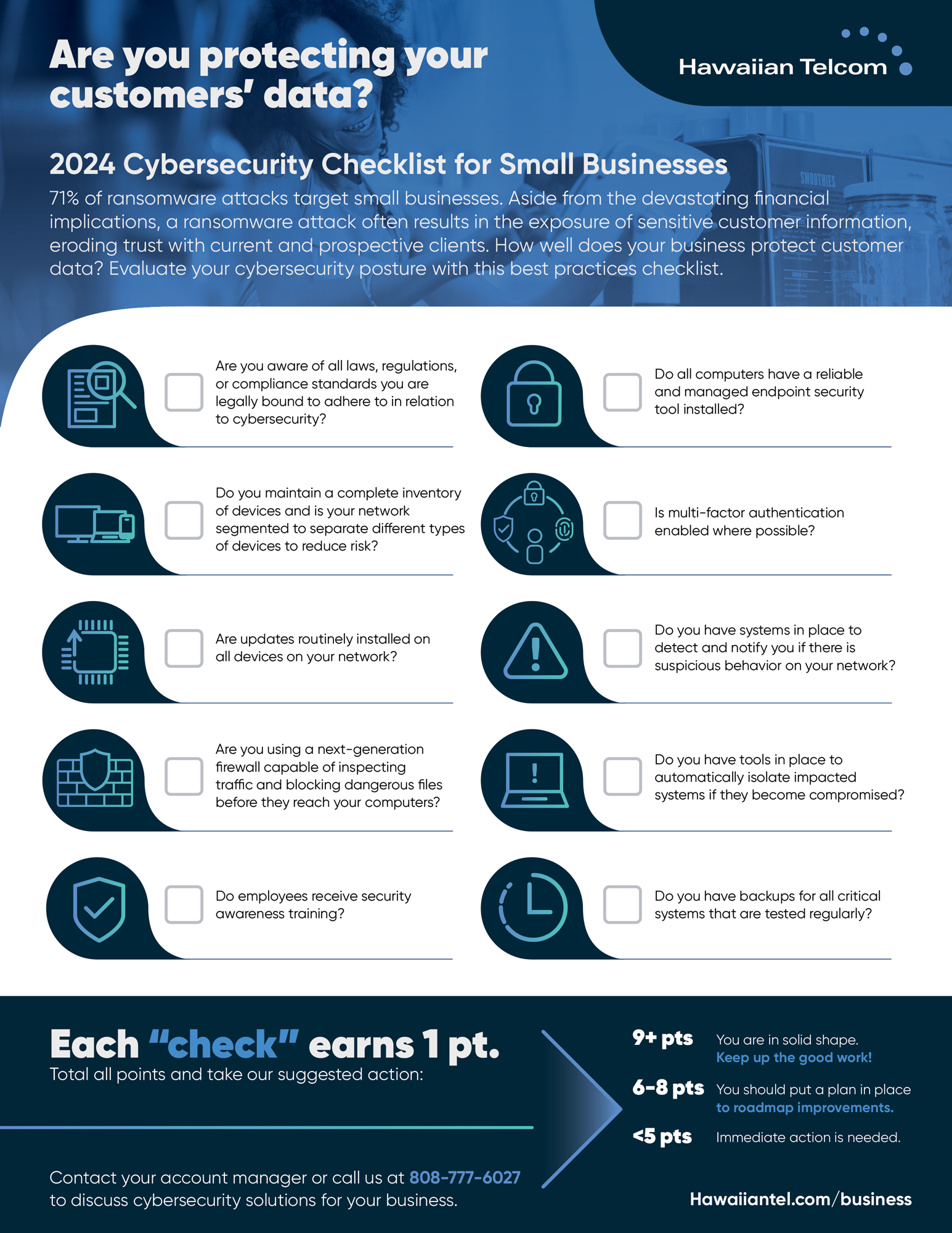
Credit: blog.hawaiiantel.com
The Cybersecurity Landscape In 2024
The cybersecurity landscape in 2024 is evolving rapidly. Small businesses face new challenges. Cyber threats are becoming more sophisticated. Understanding these threats is crucial for protection.
Emerging Threats To Small Businesses
Small businesses are prime targets for cybercriminals. Here are some key threats to watch:
- Ransomware Attacks: Malicious software locks data. Businesses must pay to regain access.
- Phishing Scams: Fraudulent emails trick employees. They often lead to data breaches.
- IoT Vulnerabilities: Internet-connected devices can be hacked. They may provide backdoor access to networks.
- Supply Chain Attacks: Hackers exploit weaknesses in third-party vendors. This can affect multiple businesses.
Importance Of Robust Network Security
Robust network security protects business data. It builds customer trust. Key benefits include:
- Data Protection: Safeguarding sensitive information is essential.
- Compliance: Meeting regulations avoids legal issues.
- Business Continuity: Strong security ensures operations run smoothly.
- Reputation Management: A secure network enhances business credibility.
Investing in security measures is not optional. It is a necessity for survival in 2024.
Essential Security Policies For Every Small Business
Small businesses face many security threats today. Having strong security policies is vital. These policies protect sensitive data and ensure business continuity. Implementing effective security measures is a necessity in 2024.
Employee Training And Awareness
Employees are the first line of defense against cyber threats. Regular training helps them recognize risks. Focus on these key areas:
- Phishing Awareness: Teach employees to spot phishing emails.
- Password Management: Encourage strong, unique passwords.
- Device Security: Ensure devices are secure and locked.
Conduct training sessions at least quarterly. Use real-life examples to make learning engaging. Foster a culture of security awareness within the team.
Regular Update And Patch Management
Keeping software up-to-date is critical. Updates fix vulnerabilities that hackers exploit. Follow these best practices:
- Schedule Regular Updates: Set a monthly schedule for updates.
- Automate Patching: Use tools to automate software updates.
- Monitor Software Performance: Check for issues after updates.
Neglecting updates can lead to security breaches. Create a checklist for managing software and system updates. Ensure all software is patched promptly.
Advanced Security Measures To Consider
As cyber threats evolve, small businesses must adapt their security strategies. Implementing advanced security measures is essential. These measures enhance protection against data breaches and cyber attacks.
Implementing Multi-factor Authentication
Multi-Factor Authentication (MFA) adds an extra layer of security. It requires users to verify their identity through two or more methods.
- Something you know (password)
- Something you have (smartphone or token)
- Something you are (fingerprint or facial recognition)
Using MFA significantly reduces unauthorized access. Here are some key benefits:
| Benefit | Description |
|---|---|
| Increased Security | Harder for hackers to gain access. |
| User Confidence | Employees feel safer knowing their data is protected. |
| Compliance | Helps meet regulatory requirements. |
Deploying Next-gen Firewalls
Next-Gen Firewalls offer advanced protection compared to traditional firewalls. They analyze network traffic in real-time.
- Inspect incoming and outgoing data.
- Identify and block threats.
- Prevent unauthorized access.
Consider these features for your firewall:
- Application Awareness: Understands the applications in use.
- Intrusion Prevention: Blocks potential threats automatically.
- SSL Inspection: Analyzes encrypted traffic for hidden risks.
Next-gen firewalls help maintain a secure network environment. They adapt to new threats quickly. Investing in them is a smart choice for small businesses.
Risk Assessment And Management
Small businesses face many security threats. Risk assessment helps identify these threats. Effective management minimizes their impact. This section covers best practices for assessing and managing risks.
Conducting Periodic Security Audits
Regular security audits are crucial. They help find vulnerabilities in your network. Follow these steps for effective audits:
- Identify Assets: List all hardware and software.
- Evaluate Security Controls: Check firewalls and antivirus software.
- Review Access Controls: Ensure only authorized personnel can access data.
- Analyze Logs: Monitor user activity and system changes.
- Document Findings: Keep records of vulnerabilities and fixes.
Consider using these tools for audits:
| Tool Name | Purpose |
|---|---|
| Wireshark | Network traffic analysis |
| Nessus | Vulnerability scanning |
| Metasploit | Penetration testing |
Creating A Disaster Recovery Plan
A disaster recovery plan protects your business. It ensures quick recovery from a security breach. Here are key components of a solid plan:
- Define Roles: Assign tasks to specific team members.
- Backup Data: Regularly back up important files.
- Communicate Plans: Share the plan with all employees.
- Test the Plan: Conduct drills to ensure effectiveness.
- Review and Update: Regularly revise the plan based on new threats.
Set a timeline for testing your plan:
- Monthly: Backup verification
- Quarterly: Full plan test
- Annually: Comprehensive review
Leveraging Encryption For Data Protection
Encryption is vital for protecting sensitive data. It transforms information into unreadable code. Only authorized users can access the original data. In 2024, small businesses must prioritize encryption. Cyber threats continue to rise, putting data at risk.
Encrypting Sensitive Information
Small businesses handle various types of sensitive information:
- Customer data
- Financial records
- Employee information
Encrypting this data helps safeguard it from unauthorized access. Follow these steps to encrypt sensitive information:
- Identify sensitive data types.
- Choose a strong encryption method.
- Implement encryption tools.
- Regularly update encryption protocols.
Encryption helps maintain customer trust. It also meets legal requirements for data protection.
Best Encryption Tools For Small Businesses
Choosing the right encryption tools is essential. Here are some of the best options:
| Tool Name | Type | Best For |
|---|---|---|
| VeraCrypt | Disk encryption | Full disk encryption |
| BitLocker | Drive encryption | Windows users |
| AxCrypt | File encryption | Individual files |
| OpenSSL | Data encryption | Developers |
Evaluate each tool based on business needs. Consider ease of use, cost, and support. Implementing the right tools can enhance data security significantly.