
Artificial Intelligence (AI) enhances cybersecurity by automating threat detection and response. It analyzes vast data sets to identify patterns and anomalies quickly.
The Role of Artificial Intelligence in Cybersecurity:As digital threats grow in complexity, organizations increasingly rely on AI to bolster their cybersecurity measures. Traditional methods struggle to keep pace with evolving threats, making AI a vital tool. It processes and analyzes large volumes of data in real-time, enabling quicker responses to potential breaches.
With machine learning algorithms, AI continuously improves its threat detection capabilities, adapting to new attack vectors. This proactive approach not only reduces response times but also minimizes damage from cyberattacks. Embracing AI in cybersecurity strategies empowers businesses to stay one step ahead of cybercriminals and protect sensitive information effectively.
The Emergence Of Ai In Cybersecurity
Artificial Intelligence (AI) is changing cybersecurity. It helps protect systems from threats. With its rapid growth, businesses rely on AI for security solutions. Understanding its role is crucial for everyone.
Early Applications
AI’s journey in cybersecurity began with simple tasks. Early applications focused on automating routine processes. Here are some early uses:
- Spam Filtering: AI learned to identify spam emails.
- Malware Detection: AI recognized known malware signatures.
- Log Analysis: AI helped analyze system logs for unusual activities.
These early applications laid the groundwork for advanced AI systems.
The Shift To Proactive Defense
AI shifted cybersecurity from reactive to proactive defense. It identifies threats before they cause harm. This change is vital for businesses today.
| Proactive Defense Features | Description |
|---|---|
| Behavioral Analysis | AI tracks user behavior to spot anomalies. |
| Real-Time Monitoring | AI provides continuous surveillance of systems. |
| Automated Response | AI can automatically respond to threats. |
Proactive defense helps in several ways:
- Reduces response time to threats.
- Minimizes damage from attacks.
- Enhances overall security posture.
AI is becoming essential in today’s cybersecurity landscape.
Understanding Ai-driven Cybersecurity
AI-driven cybersecurity uses advanced technology to protect systems. It helps identify threats quickly. This section explores the role of AI in cybersecurity. We will look at its definition and key components.
Defining Ai In The Context Of Cybersecurity
Artificial Intelligence (AI) refers to machines that can think and learn. In cybersecurity, AI helps detect threats and respond to them. AI systems analyze data patterns. They learn from past incidents to improve future responses.
Key aspects of AI in cybersecurity include:
- Automation: AI automates repetitive tasks.
- Threat Detection: AI identifies unusual activities.
- Response: AI takes actions to mitigate threats.
Key Components Of Ai-driven Systems
AI-driven cybersecurity systems consist of several key components:
| Component | Description |
|---|---|
| Machine Learning | Enables systems to learn from data. |
| Data Analysis | Processes large amounts of data efficiently. |
| Behavioral Analytics | Monitors user actions for anomalies. |
| Threat Intelligence | Uses data from various sources to predict threats. |
These components work together to enhance security.
AI-driven systems adapt and evolve. They stay ahead of cyber threats.
Ai In Identifying Threats
Artificial Intelligence plays a crucial role in identifying cyber threats. It helps detect unusual patterns and behaviors. AI systems analyze data faster than humans. This technology can improve security measures significantly.
Pattern Recognition Capabilities
AI excels at pattern recognition. It scans vast amounts of data quickly. This ability helps in spotting anomalies. Cybersecurity systems use AI to:
- Identify unusual user behavior
- Detect malware signatures
- Recognize phishing attempts
These features help teams respond before damage occurs. AI can learn from previous threats. This learning enhances future detection.
Predictive Analytics For Threat Anticipation
Predictive analytics is another vital function of AI. It uses historical data to forecast potential threats. This helps organizations stay one step ahead. Key benefits include:
- Early warning systems
- Resource optimization
- Reduced response times
AI analyzes trends and behaviors. It predicts possible attacks. This proactive approach saves time and resources. Organizations can focus on preventing threats rather than reacting to them.
Credit: houseofit.ph
Enhancing Vulnerability Management
Artificial Intelligence (AI) plays a crucial role in enhancing vulnerability management. It helps identify, assess, and mitigate risks quickly. With AI, organizations can improve their defense against cyber threats. This section explores how AI improves vulnerability management.
Automated Vulnerability Assessment
Automated vulnerability assessment tools analyze systems for weaknesses. They scan networks, applications, and devices without human intervention. This process saves time and reduces errors. Key benefits include:
- Speed: Scans complete in minutes, not days.
- Accuracy: Fewer false positives compared to manual assessments.
- Consistency: Regular scans ensure ongoing security.
These tools provide detailed reports. They highlight vulnerabilities and suggest fixes. Organizations can prioritize actions based on severity. This leads to better security management.
Prioritizing Risks With Ai
AI helps prioritize risks effectively. It evaluates vulnerabilities based on several factors:
| Factor | Description |
|---|---|
| Exploitability | How easy it is to exploit a vulnerability. |
| Impact | The potential damage caused by exploitation. |
| Exposure | The visibility of the vulnerability to attackers. |
AI analyzes these factors quickly. It assigns a risk score to each vulnerability. This score helps teams focus on the most critical issues first. Proper prioritization protects sensitive data better.
Incorporating AI in vulnerability management creates a proactive security posture. Organizations can defend against threats before they become serious problems.
Ai In Incident Response
Artificial Intelligence (AI) plays a crucial role in incident response for cybersecurity. It helps organizations react quickly to threats. AI analyzes data and identifies patterns that humans might miss. This section focuses on two key areas: speeding up response times and adaptive learning.
Speeding Up Response Times
Speed is vital in cybersecurity. A quick response can prevent data loss. AI tools can automate many tasks. Here are some ways AI speeds up incident response:
- Real-time monitoring: AI continuously scans networks for threats.
- Automated alerts: AI sends alerts instantly when it detects unusual activities.
- Rapid analysis: AI evaluates vast amounts of data quickly.
- Decision support: AI assists teams in making informed decisions promptly.
These actions reduce downtime and minimize damage. Organizations can respond swiftly to attacks and safeguard their assets.
Adaptive Learning From Past Incidents
AI not only reacts to threats but also learns from them. This adaptive learning process enhances future responses. Here’s how AI improves over time:
- Data collection: AI gathers information from previous incidents.
- Pattern recognition: AI identifies patterns in attacks.
- Improved algorithms: AI refines its algorithms based on learned data.
- Predictive analytics: AI can predict potential threats using historical data.
This continuous learning process helps organizations stay one step ahead. AI strengthens defenses by applying knowledge from past incidents. Adapting to new threats leads to a more secure environment.
| Benefit | Description |
|---|---|
| Faster Recovery | Quickly restore systems after an incident. |
| Enhanced Security | Proactively protect against future threats. |
| Resource Efficiency | Free up human resources for critical tasks. |
The Human-ai Collaboration
The collaboration between humans and AI in cybersecurity is vital. It enhances threat detection and response. AI tools help experts focus on critical tasks. Together, they create a stronger defense against cyber threats.
Augmenting Human Expertise
AI boosts human skills in many ways:
- Data Analysis: AI processes vast amounts of data quickly.
- Pattern Recognition: AI identifies unusual patterns in real-time.
- Automation: AI automates routine tasks, saving time for experts.
These features allow experts to:
- Focus on complex problems.
- Make informed decisions faster.
- Respond to threats more efficiently.
The Balance Of Machine Speed And Human Judgment
AI operates at incredible speeds. It processes data faster than any human can. Yet, human judgment remains crucial.
Humans bring:
- Context: Understanding the bigger picture of cybersecurity.
- Experience: Previous knowledge of threats and responses.
- Ethical Considerations: Making decisions based on values.
Combining speed and judgment creates a powerful defense. This synergy helps organizations stay safe in a complex digital world.
Challenges And Limitations
Artificial Intelligence (AI) brings powerful tools to cybersecurity. Yet, it faces significant challenges and limitations. Understanding these issues is crucial for effective implementation.
Dealing With Sophisticated Attacks
Cyber attackers are becoming smarter. They use advanced techniques to bypass AI defenses. Here are some key points:
- Evolving Tactics: Attackers constantly change methods.
- Adaptive Algorithms: AI must adapt quickly to new threats.
- False Positives: AI can misidentify threats, wasting time.
AI systems need ongoing training. They must learn from new attack patterns. This requires large datasets and constant updates.
Addressing Ai’s Own Vulnerabilities
AI is not infallible. It has its own weaknesses. Recognizing these is important for robust cybersecurity. Key vulnerabilities include:
| Vulnerability | Description |
|---|---|
| Data Poisoning | Attackers can manipulate training data to mislead AI. |
| Model Inversion | Hackers can reverse-engineer AI models for sensitive data. |
| Overfitting | AI may perform well on known data, failing in real scenarios. |
Continuous evaluation of AI systems is essential. Security teams must regularly test and update these models. This helps mitigate risks effectively.

Credit: www.linkedin.com
The Future Of Ai In Cybersecurity
The future of artificial intelligence in cybersecurity promises exciting advancements. AI will become crucial in fighting cyber threats. As technology evolves, so do the methods used by cybercriminals. AI’s ability to analyze vast amounts of data quickly makes it a game changer.
Evolving Threats And Ai Development
Cyber threats are becoming more sophisticated. Hackers use advanced techniques to breach systems. AI must adapt to these changing challenges. Here are some key points about evolving threats:
- Ransomware Attacks: AI can predict and stop these attacks.
- Phishing Scams: AI can detect fraudulent emails effectively.
- Zero-Day Exploits: AI identifies vulnerabilities before they are exploited.
AI tools are continuously improving. They learn from past incidents to enhance security. These tools can also automate responses to threats. This allows for quicker action and reduces damage.
Ethical Considerations In Ai Deployment
The deployment of AI in cybersecurity raises ethical questions. Key considerations include:
- Privacy: AI must not compromise user data.
- Bias: AI systems should be fair and unbiased.
- Accountability: Clear responsibility for AI actions is essential.
Organizations must implement ethical guidelines. This ensures AI serves the greater good. Transparency in AI operations builds trust. Stakeholders should discuss these issues openly.
AI’s future in cybersecurity is bright. It will empower businesses to fight against threats. However, ethical deployment is crucial for sustainable growth.
Credit: www.augmentedstartups.com
Frequently Asked Questions
How Does Ai Enhance Cybersecurity Measures?
AI enhances cybersecurity by analyzing vast amounts of data quickly. It detects anomalies and potential threats more efficiently than traditional methods. Additionally, AI can predict future attacks based on historical data, improving proactive measures. This allows organizations to respond swiftly, minimizing damage from cyber threats.
What Are Ai Tools Used In Cybersecurity?
AI tools in cybersecurity include machine learning algorithms, intrusion detection systems, and automated response software. These tools help identify threats, analyze patterns, and respond to incidents in real-time. They improve threat detection accuracy while reducing human error. Overall, they bolster an organization’s security posture significantly.
Can Ai Prevent Cyber Attacks?
While AI can significantly reduce the risk of cyber attacks, it cannot completely prevent them. It enhances threat detection and response capabilities, making attacks harder to execute. However, cybercriminals continually evolve their techniques. Therefore, a multi-layered approach combining AI and human oversight remains essential for optimal protection.
What Are The Benefits Of Ai In Cybersecurity?
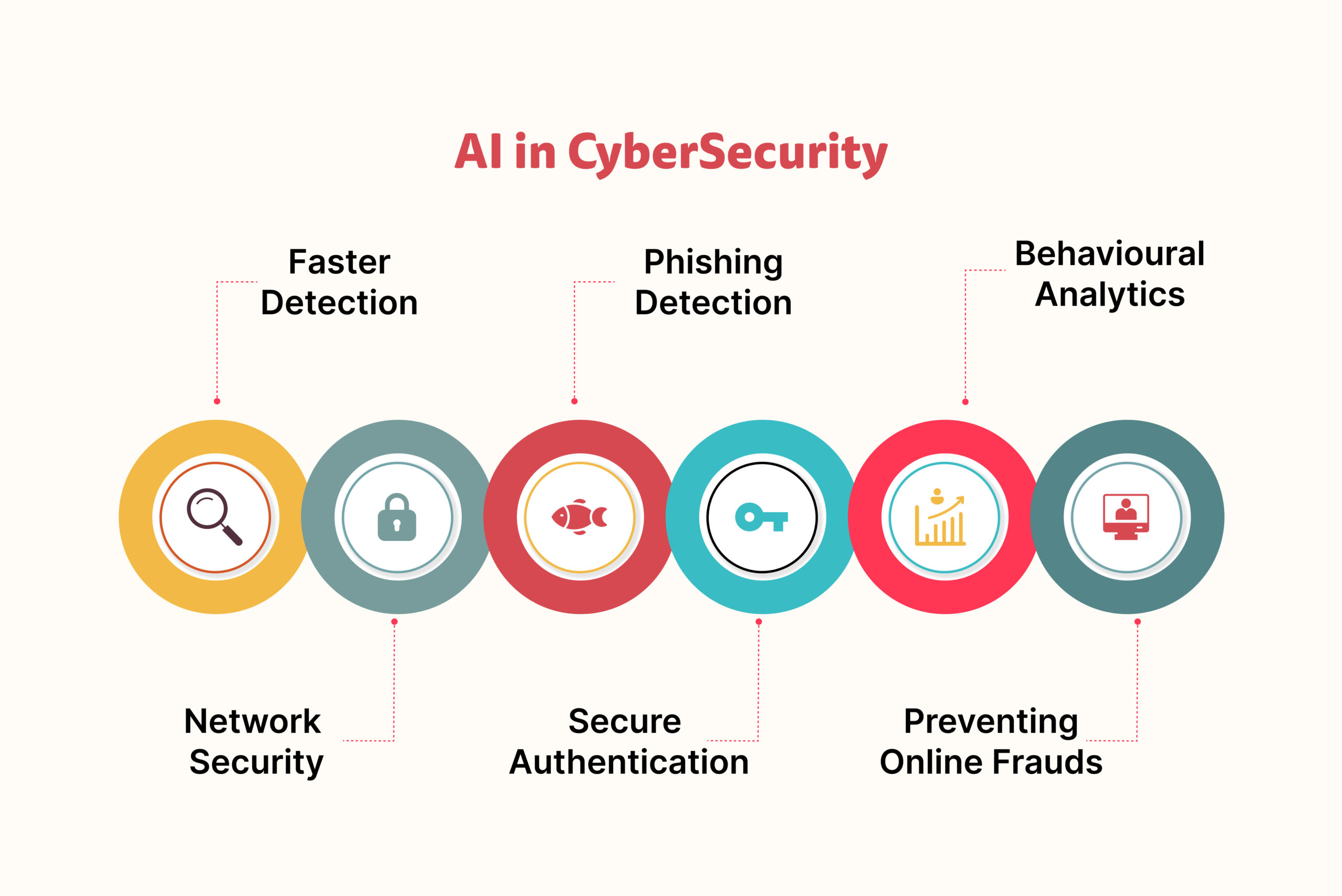
The benefits of AI in cybersecurity include faster threat detection, reduced response times, and improved accuracy. AI systems continuously learn from new threats, adapting to emerging risks. They also automate repetitive tasks, freeing up cybersecurity professionals for more strategic roles.
Overall, AI makes cybersecurity efforts more efficient and effective.
Conclusion
Artificial Intelligence is transforming cybersecurity. Its ability to analyze vast amounts of data enhances threat detection. Businesses can protect sensitive information more effectively with AI tools. As cyber threats evolve, so must our defenses. Embracing AI in cybersecurity is essential for a safer digital future.
Stay informed and proactive to safeguard your assets.


Leave a Reply