
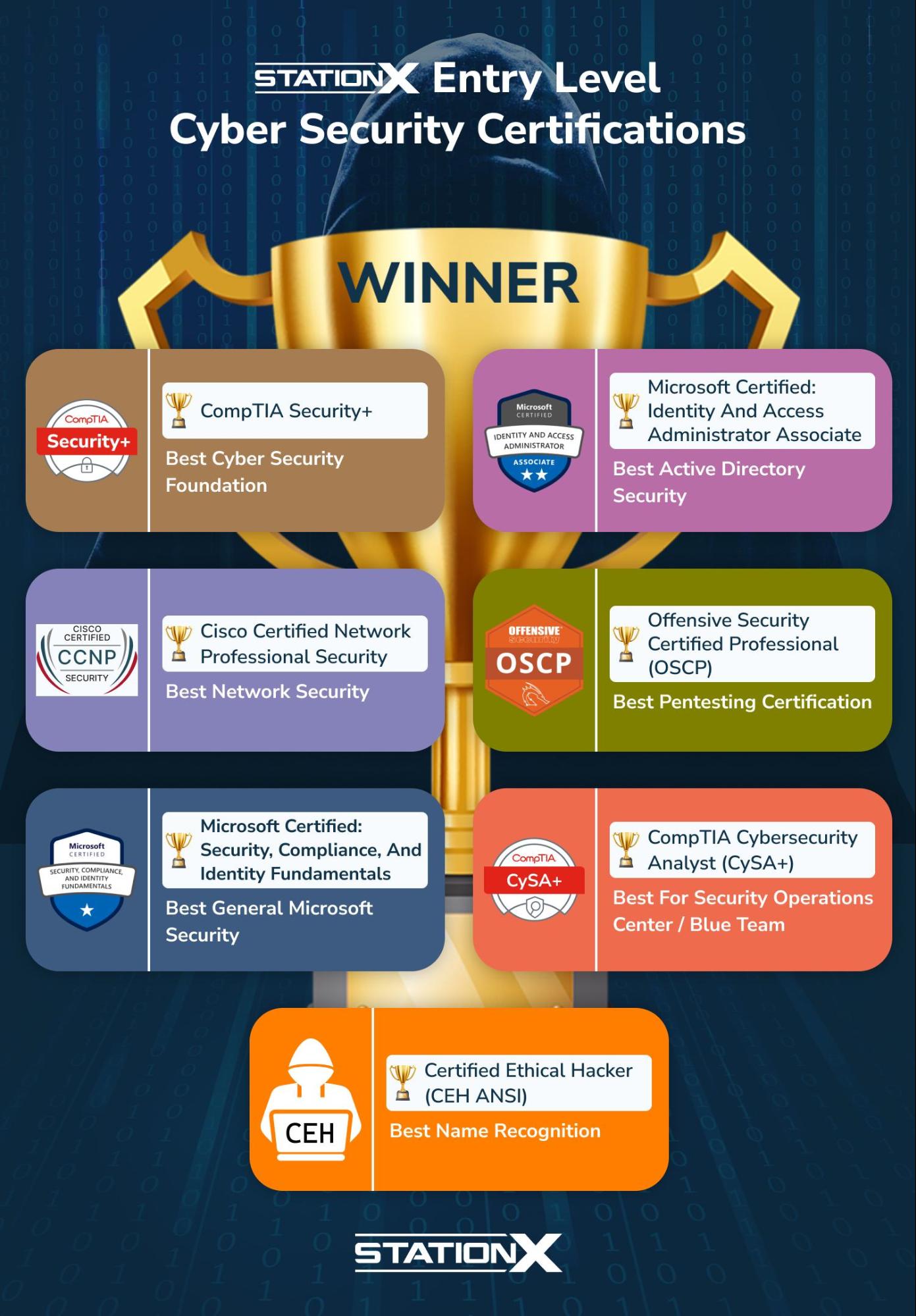
Top cybersecurity certifications for beginners include CompTIA Security+, Certified Ethical Hacker (CEH), and Cisco’s CCNA Security. These certifications provide foundational knowledge and skills to start a career in cybersecurity.
Cybersecurity is a rapidly growing field, essential for protecting sensitive information and systems from threats. As cyberattacks increase, the demand for skilled professionals rises. Beginners seeking to enter this domain can benefit from obtaining relevant certifications. These credentials not only enhance knowledge but also improve job prospects.
Many organizations prioritize certified individuals for their cybersecurity roles. Choosing the right certification can set you on a path to a successful career. This guide will explore top certifications that provide a solid foundation for aspiring cybersecurity professionals.
Introduction To Cybersecurity Certifications
Cybersecurity certifications are essential for anyone starting a career in tech. They validate knowledge and skills in a rapidly growing field. Many companies seek certified professionals for their security teams. Certifications show employers you are serious about cybersecurity. They enhance your resume and open doors to new job opportunities.
The Importance Of Certifications
Certifications play a critical role in cybersecurity. They ensure you have the necessary skills. Here are a few reasons why certifications matter:
- Standardized Knowledge: Certifications provide a clear benchmark of skills.
- Industry Recognition: They are recognized by employers worldwide.
- Up-to-date Skills: Many certifications require ongoing education.
- Networking Opportunities: Connect with other professionals in the field.
Benefits For Career Starters
For beginners, certifications offer numerous benefits. They boost confidence and credibility. Here are some key advantages:
- Enhanced Job Prospects: Certified candidates are more attractive to employers.
- Higher Salary Potential: Certifications often lead to better pay.
- Skill Development: Learning through certification prepares you for real-world challenges.
- Career Advancement: Certifications can lead to promotions and new roles.
Overall, certifications are a smart investment for future success.

Credit: www.sprintzeal.com
Identifying Your Cybersecurity Career Path
Choosing a cybersecurity career path can be exciting and challenging. The field offers various roles, each requiring different skills and knowledge. Understanding your interests and strengths will help you make informed decisions. This section explores key areas in cybersecurity and how to align certifications with your career goals.
Core Areas In Cybersecurity
Cybersecurity comprises several core areas. Each area focuses on specific skills and knowledge. Here are the main areas to consider:
- Network Security: Protecting networks from attacks.
- Application Security: Ensuring software is safe from threats.
- Information Security: Safeguarding data from unauthorized access.
- Incident Response: Managing and responding to security breaches.
- Compliance and Risk Management: Ensuring laws and regulations are followed.
Aligning Certifications With Career Goals
Choosing the right certification is vital for your career. Different roles require different certifications. Consider your desired path carefully.
| Cybersecurity Role | Recommended Certifications |
|---|---|
| Security Analyst | CompTIA Security+, Certified Ethical Hacker (CEH) |
| Network Engineer | CompTIA Network+, Cisco Certified Network Associate (CCNA) |
| Penetration Tester | Certified Ethical Hacker (CEH), Offensive Security Certified Professional (OSCP) |
| Security Manager | Certified Information Systems Security Professional (CISSP) |
Research each certification. Understand its requirements and benefits. This knowledge helps you choose the right path. Start with entry-level certifications. They build a strong foundation. As you progress, pursue advanced certifications.
Starting With The Basics: Comptia Security+
CompTIA Security+ is an essential certification for beginners. It lays a strong foundation in cybersecurity. This certification covers key principles and best practices. It’s ideal for those entering the field.
Key Concepts Covered
- Network Security: Understand how to protect networks.
- Threats and Vulnerabilities: Learn about common threats.
- Access Control: Manage who can access systems.
- Cryptography: Use encryption to secure data.
- Risk Management: Identify and mitigate risks.
This certification prepares you for real-world challenges. It focuses on practical knowledge. Expect to learn about security protocols and policies.
Exam Details And Preparation Tips
| Exam Details | Information |
|---|---|
| Exam Code | SY0-601 |
| Number of Questions | Maximum 90 |
| Exam Duration | 90 minutes |
| Passing Score | 750 out of 900 |
Preparation tips for the CompTIA Security+ exam:
- Use official study guides and materials.
- Join online forums for discussions.
- Take practice exams to assess your knowledge.
- Attend webinars or local classes.
- Use flashcards for key terms and concepts.
Stay focused on understanding the concepts. Hands-on practice helps reinforce learning. Create a study schedule and stick to it.
Networking Fundamentals: Cisco’s Ccna
The CCNA (Cisco Certified Network Associate) is a gateway for beginners. It introduces key concepts in networking. This certification focuses on essential skills for network security. Understanding these fundamentals is vital for a career in cybersecurity.
Understanding Network Security
Network security protects networks from unauthorized access. It ensures data integrity, confidentiality, and availability. Here are some key topics covered in CCNA:
- Firewall configurations
- VPNs (Virtual Private Networks)
- Intrusion Detection Systems (IDS)
- Access Control Lists (ACLs)
Learning these concepts helps you secure a network. A solid foundation in network security is essential for any cybersecurity role.
Ccna Exam Structure
The CCNA exam tests various networking skills. Here’s a breakdown of the exam structure:
| Section | Topics Covered | Weightage |
|---|---|---|
| Network Fundamentals | Basic networking concepts and protocols | 20% |
| Security Fundamentals | Network security practices and tools | 15% |
| IP Connectivity | Understanding IP addresses and routing | 25% |
| Automation and Programmability | Network automation basics | 10% |
| Network Access | Switching concepts and configuration | 30% |
The exam consists of multiple-choice questions. It also includes simulations to test practical skills. A strong preparation strategy is crucial for success.
Systems Security Certified Practitioner (sscp)
The Systems Security Certified Practitioner (SSCP) is a respected certification. It is ideal for beginners in the cybersecurity field. SSCP focuses on practical skills and knowledge. This certification is from (ISC)², a renowned organization. Earning the SSCP can boost your career opportunities.
Sscp Domains
The SSCP covers seven key domains. Each domain tests different skills and knowledge areas. Here’s a breakdown of the domains:
| Domain | Description |
|---|---|
| 1. Access Control | Manages user access to resources. |
| 2. Security Operations and Administration | Focuses on daily security tasks. |
| 3. Risk Identification, Assessment, and Management | Identifies and manages security risks. |
| 4. Incident Response and Recovery | Handles security incidents and recovery plans. |
| 5. Cryptography | Protects information through encryption. |
| 6. Network and Communications Security | Secures data in transit. |
| 7. Systems and Application Security | Secures software and systems. |
The Road To Sscp Certification
Preparing for the SSCP certification involves several steps. Follow this roadmap to achieve your goal:
- Understand the Requirements: Review the eligibility criteria.
- Study the Domains: Focus on each domain listed above.
- Use Study Materials: Utilize books, online courses, and practice exams.
- Join a Study Group: Collaborate with others preparing for SSCP.
- Schedule Your Exam: Register for the SSCP exam when ready.
With dedication and the right resources, you can earn your SSCP certification. This certification can open doors in the cybersecurity industry.

Credit: www.linkedin.com
Certified Ethical Hacker (ceh): An Introduction
The Certified Ethical Hacker (CEH) certification is ideal for beginners. It teaches the basics of ethical hacking. This certification is recognized worldwide. It helps individuals learn to think like a hacker.
With the rise of cyber threats, ethical hacking skills are essential. The CEH certification equips you with the right tools and knowledge. You will learn how to protect networks effectively.
Ethical Hacking Essentials
Ethical hacking involves testing systems for vulnerabilities. Here are some key concepts:
- Footprinting: Gathering information about targets.
- Scanning: Identifying live hosts and services.
- Gaining Access: Exploiting vulnerabilities in systems.
- Maintaining Access: Creating backdoors for future access.
- Clearing Tracks: Erasing evidence of hacking.
Understanding these essentials is crucial for success in the CEH program.
Ceh Exam And Eligibility
The CEH exam tests your knowledge of ethical hacking. Here are important details:
| Criteria | Details |
|---|---|
| Exam Length | 4 hours |
| Number of Questions | 125 |
| Passing Score | 60% or higher |
| Eligibility Requirements | 2 years of work experience in IT security |
There is an option to take a training course. This can help beginners prepare for the exam.
Start your journey in cybersecurity with the CEH certification. It opens doors to many career opportunities.
Certified Information Systems Security Professional (cissp)
The Certified Information Systems Security Professional (CISSP) is a highly respected certification in the cybersecurity world. It validates skills and knowledge in creating and managing a security program. This certification is ideal for those who want to advance in their cybersecurity careers.
Advanced Concepts In Cybersecurity
The CISSP covers many advanced topics. This includes:
- Security and Risk Management: Learn to identify and manage risks.
- Asset Security: Protect and manage information assets.
- Security Architecture and Engineering: Design secure systems.
- Communication and Network Security: Secure networks and communication channels.
- Identity and Access Management: Control user access effectively.
- Security Assessment and Testing: Evaluate security measures.
- Security Operations: Manage day-to-day security operations.
- Software Development Security: Integrate security into software development.
Each domain helps build a strong foundation in cybersecurity principles.
Cissp Exam Breakdown
The CISSP exam consists of 100 to 150 questions. Candidates have up to 3 hours to complete the test. The exam features:
| Question Type | Description |
|---|---|
| Multiple Choice | Choose the best answer from given options. |
| Advanced Innovative Questions | Interactive questions that test real-world scenarios. |
Pass marks vary, but a score of 700 or higher is usually required. The exam tests knowledge across all CISSP domains.
Preparation is key. Consider the following study methods:
- Join a study group.
- Use online courses.
- Read CISSP study guides.
- Take practice exams.
With dedication and the right resources, success is within reach.
Cybersecurity Certification Roadmap
The Cybersecurity Certification Roadmap helps beginners navigate their learning path. It outlines essential certifications. This roadmap simplifies complex choices in cybersecurity education.
Planning Your Learning Journey
Start by assessing your current knowledge. Identify your goals in cybersecurity. Here’s a simple plan to follow:
- Understand Basic Concepts: Learn about networks, systems, and security.
- Choose Entry-Level Certifications: Consider CompTIA Security+ or CEH.
- Study Regularly: Set aside time each week for learning.
- Practice Skills: Use labs and simulations to apply what you learn.
- Prepare for Exams: Use study guides and practice tests.
This plan helps beginners focus their efforts. It builds a strong foundation for future certifications.
Combining Certifications For Success
Combining certifications enhances your skills. Here are some popular combinations:
| Certification | Benefits |
|---|---|
| CompTIA Security+ | Foundational knowledge for all cybersecurity roles. |
| Certified Ethical Hacker (CEH) | Learn to think like a hacker to defend systems. |
| Cisco Certified CyberOps Associate | Focus on security operations and incident response. |
Choose certifications that complement each other. This strategy builds a versatile skill set.
- Stay updated on new trends.
- Network with other professionals.
- Participate in online forums and groups.
Combining knowledge from various certifications can lead to better job opportunities. It prepares you for real-world challenges in cybersecurity.
Preparing For Cybersecurity Certifications
Getting ready for cybersecurity certifications is essential. Proper preparation boosts your chances of success. Start by choosing the right certification. Then, gather the right study materials and resources. Use practice tests to assess your knowledge. Community support can also guide you.
Study Resources
Finding the best study resources is crucial. Here are some recommended materials:
- Books: Look for books specific to your certification.
- Online Courses: Platforms like Udemy and Coursera offer relevant courses.
- YouTube Videos: Many experts share tips and tutorials for free.
- Official Study Guides: Check the certification body’s website for guides.
Consider creating a study schedule. Stick to it for the best results. Break down topics into smaller sections. This makes learning easier.
Practice Tests And Community Support
Practice tests are an excellent way to prepare. They help you understand the exam format. Here are some options:
| Resource | Type |
|---|---|
| Exam Compass | Free Practice Tests |
| Cybrary | Practice Questions |
| MeasureUp | Paid Practice Tests |
Join online forums and groups for support. Websites like Reddit and LinkedIn have many cybersecurity communities. Engage with others preparing for the same certification.
Ask questions and share experiences. This interaction enhances learning and motivation. Support from peers can make a significant difference.
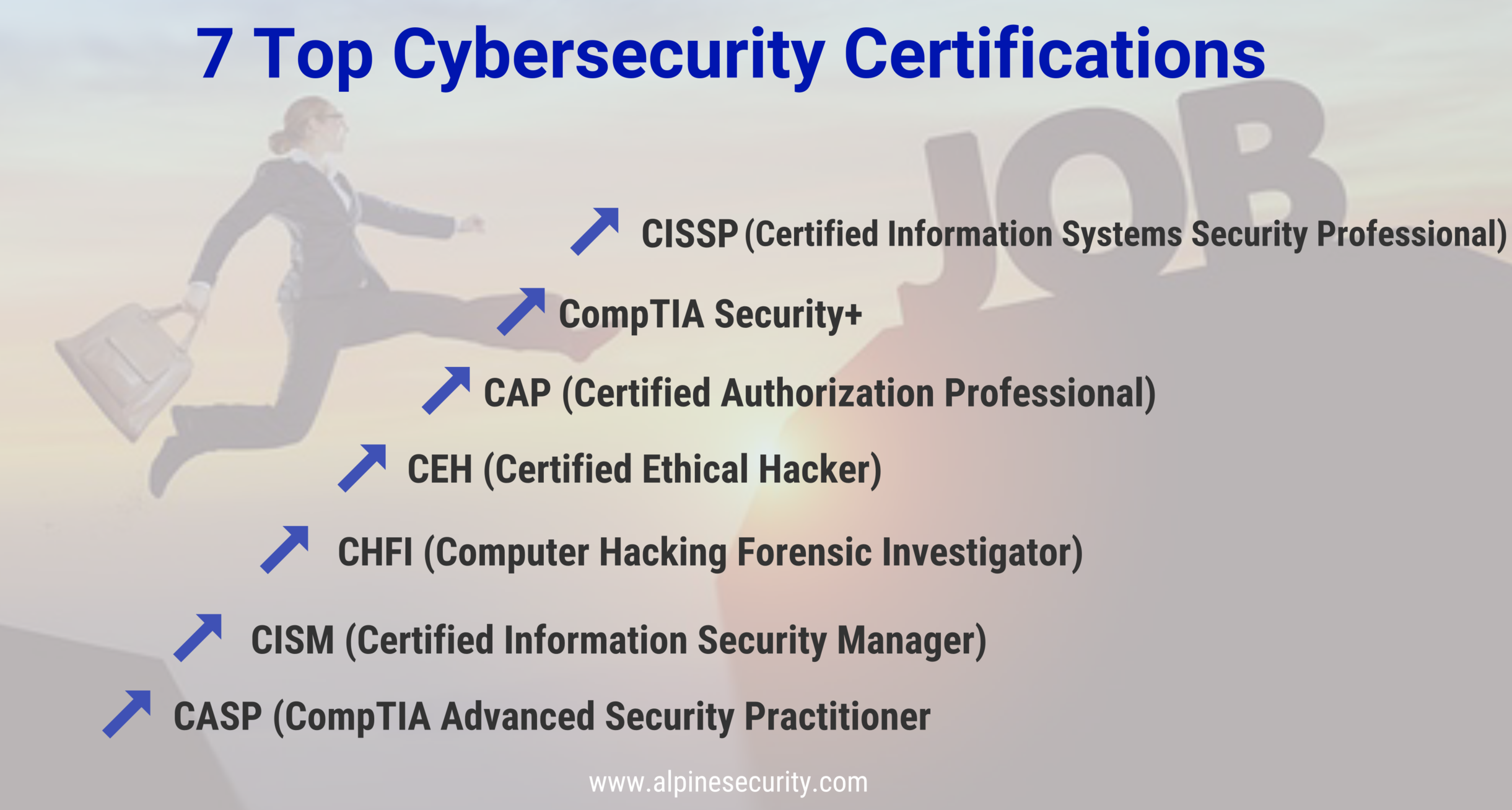
Credit: www.alpinesecurity.com
Landing Your First Cybersecurity Job
Starting a career in cybersecurity can be exciting. Certifications play a vital role. They showcase your skills and knowledge. Employers value these credentials. They can help you stand out in the job market.
Leveraging Certifications In Job Hunting
Certifications are essential for beginners. They prove your expertise in specific areas. Some popular certifications include:
- CompTIA Security+: A great starting point.
- Cisco Certified CyberOps Associate: Focuses on security operations.
- Certified Ethical Hacker (CEH): Teaches how to think like a hacker.
Highlight these certifications on your resume. Use them in your cover letter. Mention them during interviews. Employers appreciate candidates with proven skills.
Consider the following tips:
- Customize your resume for each job.
- Focus on relevant experiences.
- Showcase your certifications prominently.
Building A Professional Network
Networking is crucial in cybersecurity. Connect with professionals in the field. Attend local meetups and conferences. Join online forums and groups.
Use platforms like:
- LinkedIn: Build connections with industry leaders.
- Twitter: Follow cybersecurity experts.
- Reddit: Join subreddits focused on cybersecurity.
Engage in discussions. Share your knowledge. Ask questions. Building relationships can lead to job opportunities.
Always follow up with new contacts. A simple thank-you message can make a difference. Networking can open doors to your first job.
Maintaining And Advancing Your Credentials
Cybersecurity certifications are just the start. To stay relevant, ongoing education is essential. The tech world changes rapidly. Professionals must keep their skills updated. This section covers how to maintain and advance your credentials.
Continuing Education
Continuing education keeps your skills sharp. Many certifications require ongoing learning. This helps you stay current with trends.
- Online Courses: Take courses on platforms like Coursera or Udemy.
- Workshops: Attend local or virtual workshops.
- Webinars: Join webinars on new cybersecurity topics.
- Conferences: Participate in cybersecurity conferences for networking.
Consider the following table for popular platforms:
| Platform | Type | Focus Area |
|---|---|---|
| Coursera | Online Courses | General Cybersecurity |
| Udemy | Online Courses | Specific Tools |
| ISACA | Workshops | Governance and Risk |
| Black Hat | Conferences | Advanced Security |
Next Steps After Beginner Certifications
Beginner certifications are stepping stones. They open doors to advanced options. Consider these next steps:
- Choose an Advanced Certification: Look into CISSP or CISM.
- Specialize: Focus on areas like penetration testing or incident response.
- Network: Join professional groups and forums.
- Gain Experience: Apply skills in real-world settings.
Each of these steps helps build expertise. They lead to better job opportunities. Stay proactive in your learning journey.
Frequently Asked Questions
What Are The Best Cybersecurity Certifications For Beginners?
The best cybersecurity certifications for beginners include CompTIA Security+, Certified Ethical Hacker (CEH), and Cisco’s CyberOps Associate. These certifications provide foundational knowledge in cybersecurity principles and practices. They are widely recognized and can significantly enhance your job prospects in the cybersecurity field.
How Long Does It Take To Earn Cybersecurity Certifications?
Earning a cybersecurity certification typically takes between three to six months. This timeframe varies based on your prior knowledge and study commitment. Many candidates balance studying with full-time jobs, so a flexible study schedule can help you succeed.
Are Cybersecurity Certifications Worth The Investment?
Yes, cybersecurity certifications are worth the investment. They can lead to higher salaries, better job opportunities, and career advancement. Employers often prefer certified candidates, as certifications demonstrate commitment and knowledge in the field.
Can I Study For Certifications Online?
Absolutely! Many cybersecurity certification programs offer online courses. These courses provide flexibility and access to a wide range of resources. Online study allows you to learn at your own pace, making it easier to balance work and study commitments.
Conclusion
Choosing the right cybersecurity certification can set the foundation for your career. Each certification offers unique benefits and skills. Start with one that aligns with your interests and goals. Investing in your education will enhance your knowledge and open doors in this growing field.
Take the first step today!


Leave a Reply