

Cybersecurity threats in 2024 include advanced ransomware attacks and increased vulnerabilities in IoT devices. Organizations must prioritize proactive measures to mitigate these risks.
As we navigate through 2024, the landscape of cybersecurity continues to evolve. Cybercriminals are leveraging sophisticated techniques to exploit weaknesses in systems and networks. Ransomware remains a dominant threat, targeting businesses of all sizes and demanding hefty payments. Meanwhile, the rise of Internet of Things (IoT) devices introduces new vulnerabilities, creating additional entry points for attackers.
Companies must stay vigilant and implement robust security protocols to protect sensitive data. Educating employees about cyber hygiene is equally crucial in safeguarding against threats. By understanding and addressing these risks, businesses can better secure their digital environments and maintain customer trust in an increasingly interconnected world.
The Evolving Cyber Threat Landscape
The cyber threat landscape is changing rapidly in 2024. New technologies bring exciting opportunities, but they also create new vulnerabilities. Cybercriminals adapt quickly, using these weaknesses for malicious purposes. Understanding these trends is crucial for everyone, from businesses to individuals.
Emerging Technologies And New Vulnerabilities
Emerging technologies like the Internet of Things (IoT) and 5G networks increase the number of connected devices. Each device can be a potential target for cyberattacks. Here are some common vulnerabilities:
- Weak passwords
- Unpatched software
- Insecure configurations
These vulnerabilities lead to serious risks, including:
- Data breaches
- Financial losses
- Reputational damage
Organizations must prioritize security measures. Regular updates and strong passwords can help protect against these threats.
The Rise Of Ai In Cyber Attacks
Artificial Intelligence (AI) is becoming a tool for cybercriminals. They use AI to automate attacks and make them more effective. Some notable uses of AI in cyberattacks include:
- Phishing: AI can create realistic emails that trick users.
- Malware: Smart malware can adapt to avoid detection.
- DDoS attacks: AI can control multiple devices to overwhelm a target.
These tactics make it harder for traditional defenses to keep up. Organizations need to invest in AI-driven security solutions. This investment can help spot threats faster and respond effectively.
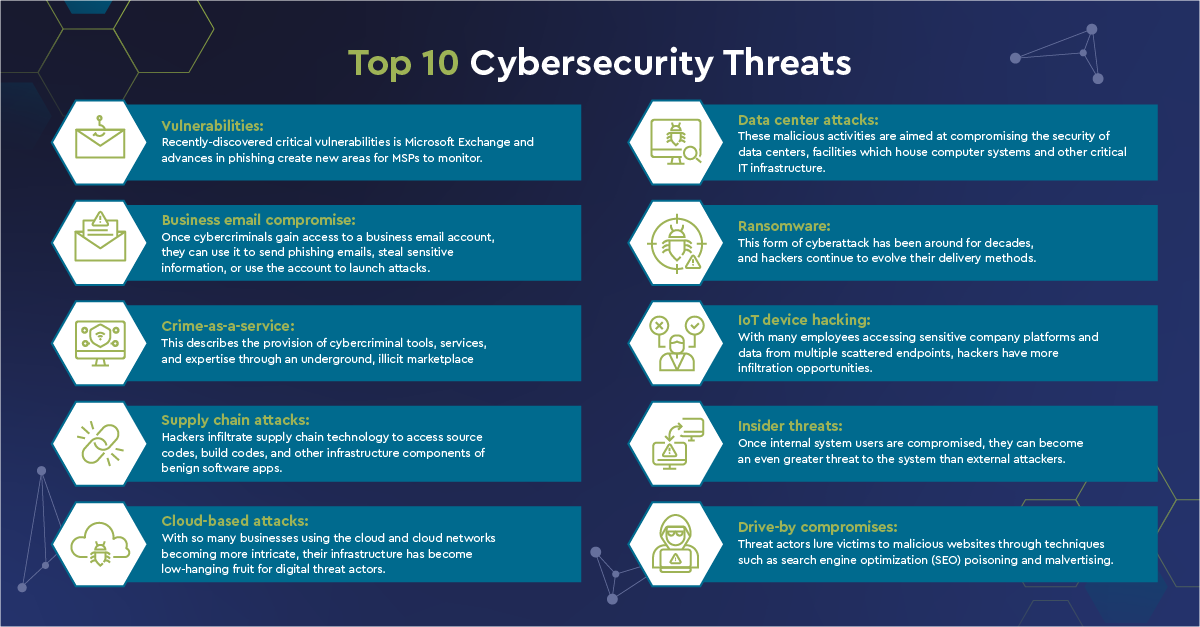
Credit: www.connectwise.com
Key Cybersecurity Threats To Watch In 2024
Cybersecurity in 2024 faces new challenges. Attackers are more creative. Organizations must stay alert. Here are the key threats to watch.
Ransomware Tactics And Targets
Ransomware remains a top threat. Attackers use advanced tactics to maximize impact. They target:
- Healthcare institutions
- Government agencies
- Large corporations
- Educational institutions
Ransomware groups will likely:
- Utilize double extortion methods
- Target backups to increase leverage
- Focus on high-value data
Organizations must implement strong security measures. Regular backups and employee training are essential.
State-sponsored Cyber Warfare
Nation-states are increasing their cyber activities. They aim to disrupt economies and steal data. Common tactics include:
- Espionage
- Infrastructure attacks
- Disinformation campaigns
Vulnerable sectors include:
| Sector | Risk Level |
|---|---|
| Energy | High |
| Finance | High |
| Healthcare | Medium |
Governments must enhance defenses. Collaboration and intelligence sharing are crucial.
Deepfake Technology Abuse
Deepfake technology is evolving rapidly. This poses a unique threat. Cybercriminals can create realistic fake videos and audio. They may use this for:
- Fraud
- Blackmail
- Spreading false information
Organizations must stay informed. Implementing detection tools can help. Training employees on recognizing deepfakes is vital.
Vulnerable Sectors: Who’s At Risk?
Cybersecurity threats are evolving rapidly. Many sectors face increased risks in 2024. Understanding these vulnerable areas helps businesses protect themselves.
Healthcare Industry Challenges
The healthcare industry is a primary target for cyberattacks. Patient data is valuable and sensitive. Cybercriminals exploit vulnerabilities for financial gain.
- Data Breaches: Unauthorized access to patient records.
- Ransomware Attacks: Locking essential data until a ransom is paid.
- IoT Devices: Many devices lack proper security measures.
Healthcare organizations must invest in robust cybersecurity measures. Training staff on security best practices is essential.
Financial Sector Under Siege
The financial sector faces relentless cyber threats. Hackers aim to steal funds and personal data. The impact of these attacks can be devastating.
| Threat Type | Description | Impact |
|---|---|---|
| Phishing | Tricking users into sharing sensitive information. | Loss of funds and trust. |
| Card Skimming | Stealing credit card information from devices. | Financial loss for customers and banks. |
| Denial of Service | Overloading systems to disrupt services. | Service outages and customer frustration. |
Financial institutions must strengthen their defenses. Regular audits and employee training are crucial.
Critical Infrastructure At Crosshairs
Critical infrastructure is vital for society’s functioning. This includes energy, water, and transportation systems. Cyberattacks on these sectors can cause chaos.
- Energy Sector: Attacks can disrupt power grids.
- Water Supply: Contamination can occur due to cyber interference.
- Transportation: Systems can be paralyzed, affecting logistics.
Protecting critical infrastructure is essential for national security. Government and private sectors must collaborate for better security.
Personal Data At Risk: Privacy Concerns
Cybersecurity threats in 2024 put your personal data in danger. Hackers are finding new ways to steal information. Protecting your privacy is more important than ever. Understanding these threats helps you stay safe.
Phishing Scams: A Constant Threat
Phishing scams trick users into sharing personal data. Scammers use emails and messages that appear real.
- Fake emails from trusted sources
- Links to fraudulent websites
- Urgent calls for action
Always check the sender’s address. Look for spelling errors or strange requests. Here are tips to avoid phishing:
- Never click on unknown links.
- Verify the sender before responding.
- Use two-factor authentication.
The Dark Web And Identity Theft
The dark web is a hidden part of the internet. Here, stolen data is bought and sold. Identity theft is a major issue.
| Type of Data | Value on the Dark Web |
|---|---|
| Credit Card Information | $5 – $50 |
| Social Security Numbers | $1 – $20 |
| Login Credentials | $1 – $10 |
Protect your identity with these steps:
- Monitor bank statements regularly.
- Use strong, unique passwords.
- Consider a credit monitoring service.
Cybersecurity is everyone’s responsibility. Stay informed to protect your personal data.
Corporate Cyber Defense Strategies
In 2024, businesses face growing cyber threats. Companies must adopt effective cyber defense strategies. These strategies protect sensitive data and maintain customer trust.
Implementing Robust Security Frameworks
Building a strong security framework is vital for any organization. Here are key components:
- Risk Assessment: Identify potential vulnerabilities.
- Access Controls: Limit access to sensitive data.
- Network Security: Use firewalls and intrusion detection systems.
- Data Encryption: Encrypt data both at rest and in transit.
Companies should regularly update their security policies. Regular audits can uncover gaps. Here’s a simple table outlining best practices:
| Practice | Frequency | Description |
|---|---|---|
| Risk Assessment | Quarterly | Identify new vulnerabilities. |
| Policy Review | Annually | Ensure compliance and relevance. |
| Software Updates | Monthly | Patch security flaws. |
Employee Training And Awareness Programs
Employees are often the first line of defense. Training can reduce human error. Here are effective training strategies:
- Conduct regular training sessions.
- Simulate phishing attacks to test awareness.
- Provide resources for reporting suspicious activity.
Key topics should include:
- Password Management: Use strong, unique passwords.
- Social Engineering: Recognize manipulation tactics.
- Data Handling: Properly handle sensitive information.
Creating a culture of cybersecurity is essential. Encourage employees to stay vigilant. This proactive approach helps in preventing breaches.
Governmental Role In Cybersecurity
Governments play a crucial role in cybersecurity. They create laws and policies to protect citizens. As threats grow, so does the need for effective measures. In 2024, this role becomes even more vital. Governments must ada