

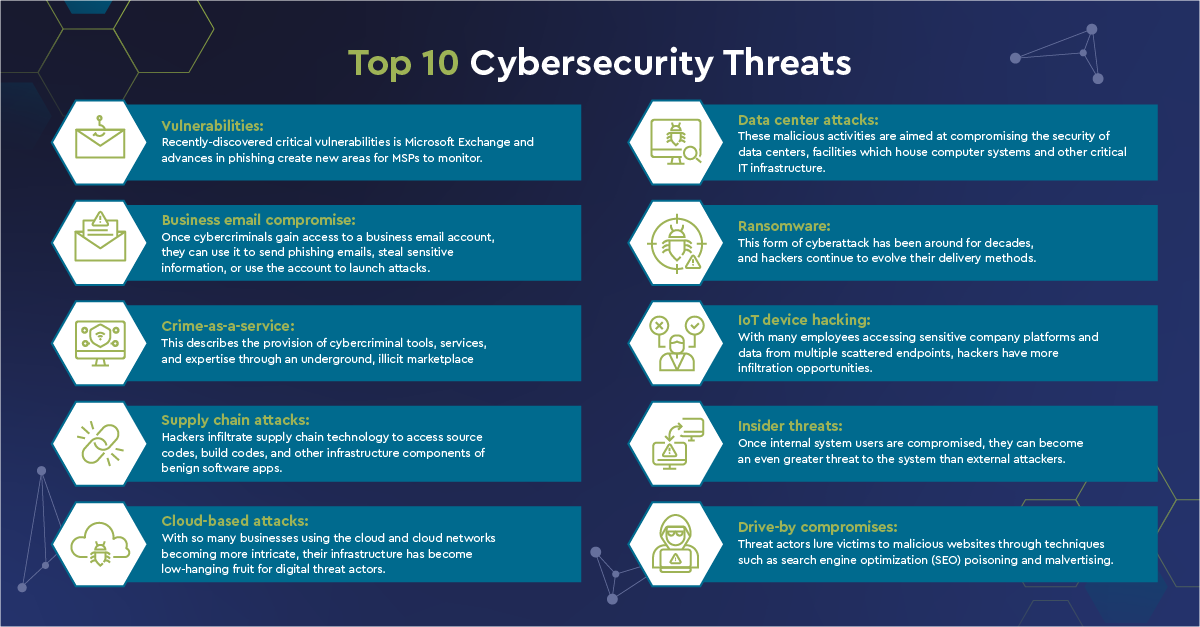
Top cybersecurity threats to watch out for in 2024 include advanced ransomware attacks and sophisticated phishing schemes. Organizations must prioritize proactive measures to mitigate these risks effectively.
As technology evolves, so do the tactics of cybercriminals. In 2024, businesses and individuals face an increasingly complex landscape of cybersecurity threats. Ransomware attacks are becoming more advanced, targeting critical infrastructures and demanding hefty ransoms. Phishing scams are also evolving, leveraging AI to craft more convincing messages.
The rise of IoT devices creates additional vulnerabilities, making it easier for hackers to infiltrate networks. With these challenges on the horizon, understanding these threats is essential. Staying informed and implementing robust security measures will help protect sensitive data and maintain trust in digital interactions. Prioritizing cybersecurity is no longer optional; it’s a necessity for survival in today’s digital world.
Emerging Cybersecurity Threats In 2024
The digital landscape is changing rapidly. New threats emerge every year. In 2024, cybersecurity will face unique challenges. Understanding these threats is crucial for protection.
Sophisticated Phishing Tactics
Phishing remains a top threat. Attackers use clever tricks to deceive people. They create fake emails and websites that look real. Many people fall for these scams.
In 2024, phishing tactics will evolve. Here are some key trends:
- Personalization: Attackers will use personal information.
- Deepfakes: Fake videos and audio will mislead users.
- Urgency: Messages will create a sense of panic.
Watch for signs of phishing:
- Check for spelling errors.
- Look for strange email addresses.
- Verify links before clicking.
Ai-powered Attacks
Artificial Intelligence (AI) transforms cybersecurity threats. Hackers will use AI tools to enhance their attacks. These tools can analyze data faster than humans.
AI-powered attacks can include:
- Automated Phishing: AI generates believable emails.
- Malware Evolution: AI helps create smarter malware.
- Data Breaches: AI identifies weak spots in networks.
To combat AI attacks, companies should:
- Invest in AI-driven security solutions.
- Train staff on recognizing AI threats.
- Regularly update security protocols.
Ransomware Evolution
Ransomware attacks are changing fast. Cybercriminals adapt to new technologies. They find new ways to target victims. This evolution is alarming. Organizations must stay informed about these threats.
Targeting Iot Devices
The Internet of Things (IoT) is growing quickly. Many devices connect to the internet. These include smart home gadgets, industrial tools, and healthcare devices.
Cybercriminals see IoT devices as easy targets. They often lack proper security. Hackers can access these devices and spread ransomware.
- Smart Cameras: Can be hacked to record sensitive information.
- Smart Thermostats: May provide entry points for attackers.
- Wearable Devices: Can leak health data, making users vulnerable.
Protecting IoT devices is crucial. Strong passwords and regular updates help. Use a separate network for IoT devices. This limits damage if a device gets hacked.
Double Extortion Schemes
Double extortion is a new tactic. Hackers not only encrypt data but also steal it. They demand ransom for both restoring data and keeping it private.
This method increases pressure on victims. Organizations face threats of data leaks. They must deal with potential reputational damage.
| Step | Description |
|---|---|
| 1 | Hackers breach a system and steal data. |
| 2 | Data is encrypted, making it inaccessible. |
| 3 | Victims receive ransom demands. |
| 4 | Failure to pay risks data exposure. |
Organizations must prepare for this threat. Regular data backups and strong security measures help. Employees should be trained to recognize phishing attempts.
The Rise Of Deepfakes
The year 2024 sees a surge in the use of deepfake technology. This technology creates realistic fake videos or audio. It can imitate anyone’s appearance or voice. The ease of access to deepfake tools raises serious concerns.
Cybercriminals can use deepfakes for malicious purposes. These include spreading false information or committing fraud. Understanding the implications of deepfakes is crucial for safety.
Implications For Identity Fraud
Deepfakes pose significant risks for identity fraud. Criminals can create fake videos of individuals. These fakes can be used to manipulate people and institutions.
- Fake videos can mislead organizations.
- People might lose trust in online content.
- Financial losses can occur due to fraud.
Individuals and businesses must stay alert. Protecting personal data is essential to avoid falling victim.
Challenges In Detection
Detecting deepfakes is becoming increasingly difficult. Traditional methods may not work effectively. Here are some challenges:
| Challenge | Description |
|---|---|
| Rapid Advancement | Deepfake technology evolves quickly, making detection harder. |
| Cost of Detection Tools | High-quality detection tools can be expensive. |
| Public Awareness | Many people are unaware of deepfake risks. |
Investing in detection technology is crucial. Educating the public can also help reduce risks. Awareness is key in combating this emerging threat.
Credit: www.connectwise.com
State-sponsored Attacks
State-sponsored attacks are a significant threat in 2024. These attacks occur when governments support cyber activities against other nations. They aim for political, economic, or strategic gains. Understanding these threats is crucial for organizations and individuals alike.
Political Espionage
Political espionage involves stealing sensitive information from governments. Hackers often target:
- Diplomatic communications
- Election data
- Government policies
These attacks can affect national security. They undermine trust in political systems. Countries may use advanced techniques like:
- Phishing emails
- Malware attacks
- Social engineering tactics
Economic Sabotage
Economic sabotage targets a nation’s economy. Cybercriminals aim to disrupt businesses and infrastructure. This can lead to:
- Data theft
- Service disruptions
- Financial losses
Common methods include:
| Method | Description |
|---|---|
| Ransomware | Encrypts data and demands payment for access. |
| Denial-of-Service (DoS) | Overloads a system, making it unavailable. |
| Supply Chain Attacks | Targets third-party vendors to access larger networks. |
These actions can destabilize economies. Nations must strengthen their defenses to combat these threats.
Supply Chain Vulnerabilities
Supply chain vulnerabilities are a growing concern in cybersecurity. Cybercriminals exploit weak links in the supply chain. These attacks can impact multiple organizations at once. Companies must understand these threats to protect themselves.
Compromised Software Updates
Software updates are vital for security. However, they can also be a gateway for attacks. Hackers target software providers to deliver malicious updates. Here are key points to consider:
- Ensure updates come from trusted sources.
- Check for signs of tampering in update files.
- Utilize automated tools to verify updates.
Organizations should implement strict controls. Monitor software development practices to reduce risk. Regular audits can identify potential vulnerabilities.
Third-party Risks
Third-party vendors pose significant risks. A weak security posture in one vendor can expose many others. Understanding these risks is essential for businesses. Key risks include:
| Risk Factor | Description |
|---|---|
| Vendor Security | Vendors may not follow strict security protocols. |
| Access Control | Third parties may have excessive access to systems. |
| Data Sharing | Data shared with vendors can be vulnerable to breaches. |
Businesses should conduct thorough assessments of third parties. Regular training and awareness programs can strengthen defenses. Establish clear contracts with security requirements for vendors.