
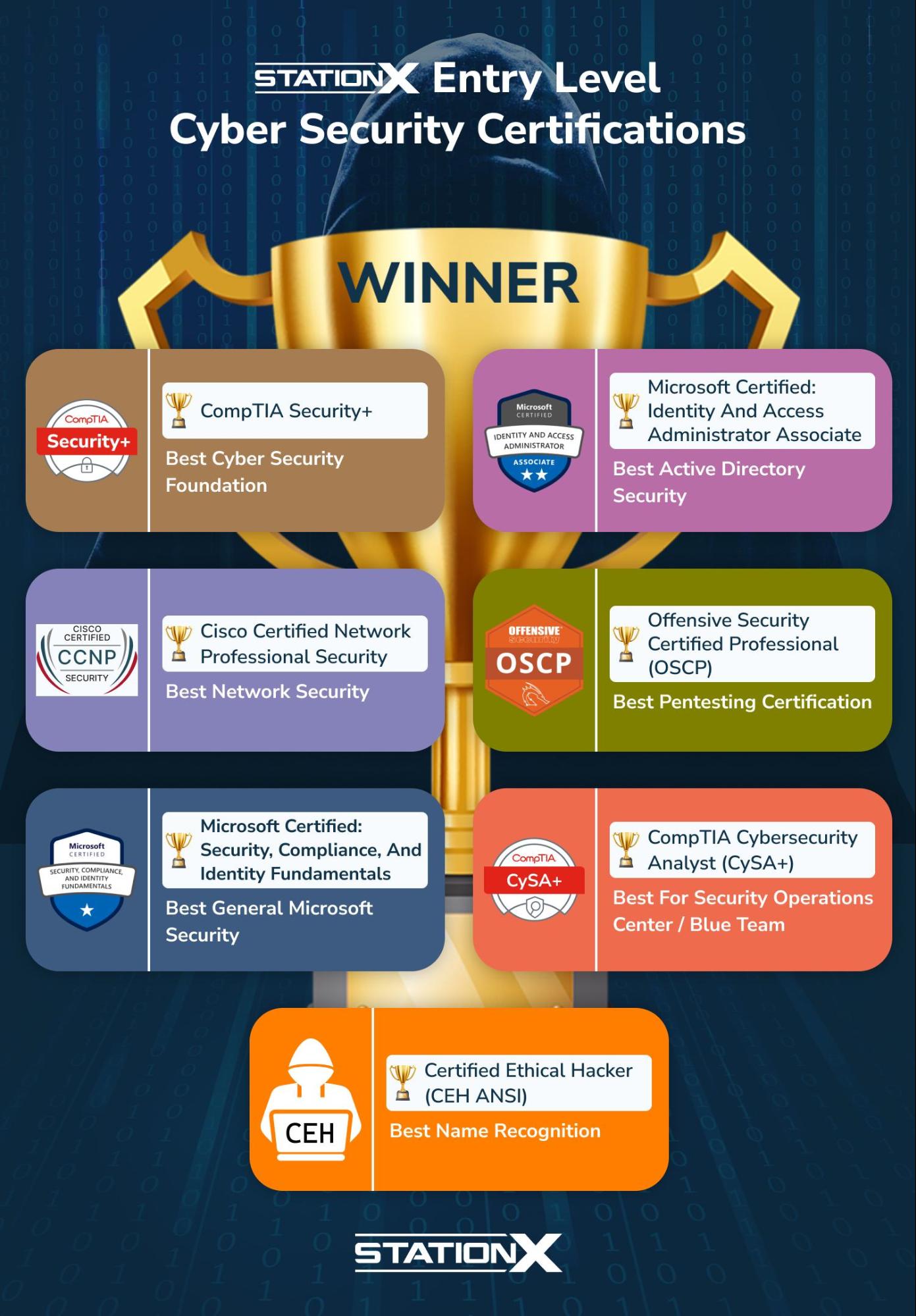
Top cybersecurity certifications for beginners include CompTIA Security+, Certified Ethical Hacker (CEH), and Cisco’s CCNA Security. These certifications provide foundational knowledge and skills to start a career in cybersecurity.
Cybersecurity is a rapidly growing field, essential for protecting sensitive information and systems from threats. As cyberattacks increase, the demand for skilled professionals rises. Beginners seeking to enter this domain can benefit from obtaining relevant certifications. These credentials not only enhance knowledge but also improve job prospects.
Many organizations prioritize certified individuals for their cybersecurity roles. Choosing the right certification can set you on a path to a successful career. This guide will explore top certifications that provide a solid foundation for aspiring cybersecurity professionals.
Introduction To Cybersecurity Certifications
Cybersecurity certifications are essential for anyone starting a career in tech. They validate knowledge and skills in a rapidly growing field. Many companies seek certified professionals for their security teams. Certifications show employers you are serious about cybersecurity. They enhance your resume and open doors to new job opportunities.
The Importance Of Certifications
Certifications play a critical role in cybersecurity. They ensure you have the necessary skills. Here are a few reasons why certifications matter:
- Standardized Knowledge: Certifications provide a clear benchmark of skills.
- Industry Recognition: They are recognized by employers worldwide.
- Up-to-date Skills: Many certifications require ongoing education.
- Networking Opportunities: Connect with other professionals in the field.
Benefits For Career Starters
For beginners, certifications offer numerous benefits. They boost confidence and credibility. Here are some key advantages:
- Enhanced Job Prospects: Certified candidates are more attractive to employers.
- Higher Salary Potential: Certifications often lead to better pay.
- Skill Development: Learning through certification prepares you for real-world challenges.
- Career Advancement: Certifications can lead to promotions and new roles.
Overall, certifications are a smart investment for future success.

Credit: www.sprintzeal.com
Identifying Your Cybersecurity Career Path
Choosing a cybersecurity career path can be exciting and challenging. The field offers various roles, each requiring different skills and knowledge. Understanding your interests and strengths will help you make informed decisions. This section explores key areas in cybersecurity and how to align certifications with your career goals.
Core Areas In Cybersecurity
Cybersecurity comprises several core areas. Each area focuses on specific skills and knowledge. Here are the main areas to consider:
- Network Security: Protecting networks from attacks.
- Application Security: Ensuring software is safe from threats.
- Information Security: Safeguarding data from unauthorized access.
- Incident Response: Managing and responding to security breaches.
- Compliance and Risk Management: Ensuring laws and regulations are followed.
Aligning Certifications With Career Goals
Choosing the right certification is vital for your career. Different roles require different certifications. Consider your desired path carefully.
| Cybersecurity Role | Recommended Certifications |
|---|---|
| Security Analyst | CompTIA Security+, Certified Ethical Hacker (CEH) |
| Network Engineer | CompTIA Network+, Cisco Certified Network Associate (CCNA) |
| Penetration Tester | Certified Ethical Hacker (CEH), Offensive Security Certified Professional (OSCP) |
| Security Manager | Certified Information Systems Security Professional (CISSP) |
Research each certification. Understand its requirements and benefits. This knowledge helps you choose the right path. Start with entry-level certifications. They build a strong foundation. As you progress, pursue advanced certifications.
Starting With The Basics: Comptia Security+
CompTIA Security+ is an essential certification for beginners. It lays a strong foundation in cybersecurity. This certification covers key principles and best practices. It’s ideal for those entering the field.
Key Concepts Covered
- Network Security: Understand how to protect networks.
- Threats and Vulnerabilities: Learn about common threats.
- Access Control: Manage who can access systems.
- Cryptography: Use encryption to secure data.
- Risk Management: Identify and mitigate risks.
This certification prepares you for real-world challenges. It focuses on practical knowledge. Expect to learn about security protocols and policies.
Exam Details And Preparation Tips
| Exam Details | Information |
|---|---|
| Exam Code | SY0-601 |
| Number of Questions | Maximum 90 |
| Exam Duration | 90 minutes |
| Passing Score | 750 out of 900 |
Preparation tips for the CompTIA Security+ exam:
- Use official study guides and materials.
- Join online forums for discussions.
- Take practice exams to assess your knowledge.
- Attend webinars or local classes.
- Use flashcards for key terms and concepts.
Stay focused on understanding the concepts. Hands-on practice helps reinforce learning. Create a study schedule and stick to it.
Networking Fundamentals: Cisco’s Ccna
The CCNA (Cisco Certified Network Associate) is a gateway for beginners. It introduces key concepts in networking. This certification focuses on essential skills for network security. Understanding these fundamentals is vital for a career in cybersecurity.
Understanding Network Security
Network security protects networks from unauthorized access. It ensures data integrity, confidentiality, and availability. Here are some key topics covered in CCNA:
- Firewall configurations
- VPNs (Virtual Private Networks)
- Intrusion Detection Systems (IDS)
- Access Control Lists (ACLs)
Learning these concepts helps you secure a network. A solid foundation in network security is essential for any cybersecurity role.
Ccna Exam Structure
The CCNA exam tests various networking skills. Here’s a breakdown of the exam structure:
| Section | Topics Covered | Weightage |
|---|---|---|
| Network Fundamentals | Basic networking concepts and protocols | 20% |
| Security Fundamentals | Network security practices and tools | 15% |
| IP Connectivity | Understanding IP addresses and routing | 25% |
| Automation and Programmability | Network automation basics | 10% |
| Network Access | Switching concepts and configuration | 30% |
The exam consists of multiple-choice questions. It also includes simulations to test practical skills. A strong preparation strategy is crucial for success.
Systems Security Certified Practitioner (sscp)
The Systems Security Certified Practitioner (SSCP) is a respected certification. It is ideal for beginners in the cybersecurity field. SSCP focuses on practical skills and knowledge. This certification is from (ISC)², a renowned organization. Earning the SSCP can boost your career opportunities.
Sscp Domains
The SSCP covers seven key domains. Each domain tests different skills and knowledge areas. Here’s a breakdown of the domains:
| Domain | Description |
|---|---|
| 1. Access Control | Manages user access to resources. |
| 2. Security Operations and Administration | Focuses on daily security tasks. |
| 3. Risk Identification, Assessment, and Management | Identifies and manages security risks. |
| 4. Incident Response and Recovery | Handles security incidents and recovery plans. |
| 5. Cryptography | P |