

Ethical hacking techniques identify and fix vulnerabilities in network security. These methods help protect sensitive information from cyber threats.
Ethical Hacking Techniques for Network Security:Ethical hacking, often called penetration testing, plays a crucial role in network security. It involves simulating cyber attacks to identify and remedy security flaws. Ethical hackers use various techniques such as vulnerability scanning, social engineering, and penetration testing. These professionals ensure that networks are robust and resilient against potential threats.
Employing ethical hackers helps organizations stay ahead of cybercriminals. Regular assessments and continuous monitoring are essential for maintaining network integrity. Effective ethical hacking fortifies network defenses and safeguards sensitive data. This proactive approach is vital for any organization aiming to secure its digital assets.
Introduction To Ethical Hacking
Ethical hacking helps protect networks from bad hackers. Ethical hackers find and fix security holes. This keeps data and systems safe.
What Is Ethical Hacking?
Ethical hacking means finding and fixing security problems. Ethical hackers use the same methods as bad hackers. But they help companies stay safe.
Importance In Network Security
Network security is very important. Networks hold sensitive data. Ethical hacking helps protect this data. Without it, hackers can steal information.
- Identifies weak spots in the network
- Prevents data breaches
- Ensures compliance with regulations
| Benefit | Description |
|---|---|
| Security Assessment | Finds and fixes security holes |
| Data Protection | Keeps sensitive data safe |
| Compliance | Ensures rules are followed |
Types Of Ethical Hacking
Ethical hacking is essential for network security. Different hackers use different techniques. Let’s explore three main types: White Hat, Black Hat, and Gray Hat Hackers.
White Hat Hackers
White Hat Hackers are the good guys. They protect systems and networks. They work with organizations to find and fix vulnerabilities.
- Use legal methods
- Follow ethical guidelines
- Help improve security
White Hat Hackers use tools like penetration testing. They identify weaknesses and secure systems.
Black Hat Hackers
Black Hat Hackers are the bad guys. They break into systems without permission. Their goal is to steal data or cause harm.
- Use illegal methods
- Ignore ethical guidelines
- Cause damage or steal information
Black Hat Hackers use malware and exploit vulnerabilities. Their actions are harmful and illegal.
Gray Hat Hackers
Gray Hat Hackers fall in between. They don’t have permission but don’t harm systems. They find vulnerabilities and report them.
- Use semi-legal methods
- Don’t follow strict ethical guidelines
- Sometimes help, sometimes harm
Common Hacking Techniques
Network security is crucial in our digital world. Understanding common hacking techniques helps protect systems. Let’s explore three major techniques hackers use.
Phishing
Phishing is a popular hacking method. Hackers trick people into giving personal information. They usually send fake emails that look real.
- Emails often contain malicious links.
- They may ask for passwords or credit card details.
- Victims think the email is from a trusted source.
Be cautious of unexpected emails. Check the sender’s address carefully. Never click on suspicious links.
Sql Injection
SQL Injection is a technique used to exploit databases. Hackers insert malicious SQL code into input fields.
| Action | Result |
|---|---|
| Insert code | Gain unauthorized access |
| Modify database | Steal or delete data |
Secure input fields to prevent SQL injections. Use prepared statements and parameterized queries.
Denial Of Service
Denial of Service (DoS) attacks overload systems. The goal is to make a website or service unavailable.
- Attackers send massive amounts of traffic.
- Servers get overwhelmed and crash.
- Legitimate users cannot access the service.
Implement measures to detect and mitigate DoS attacks. Use firewalls and load balancers to manage traffic.
Understanding these techniques helps in building strong network security. Stay informed and vigilant.
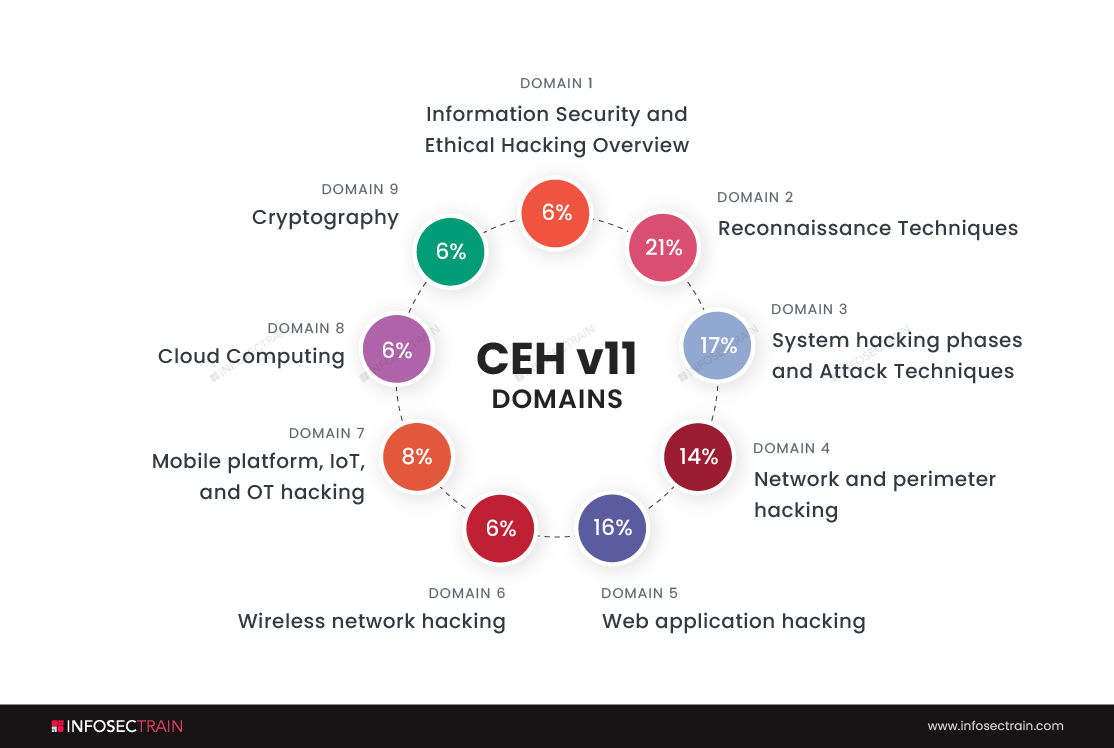
Credit: www.infosectrain.com
Network Security Basics
Understanding the basics of network security is crucial in protecting data. Ethical hacking techniques help identify and fix vulnerabilities. Let’s explore some fundamental aspects.
Firewalls
Firewalls act as a barrier between your network and potential threats. They filter incoming and outgoing traffic based on security rules. Firewalls can be hardware, software, or a combination of both.
- Packet Filtering Firewalls: Check packets of data against a set of rules.
- Stateful Inspection Firewalls: Track the state of active connections and make decisions based on the context of the traffic.
- Proxy Firewalls: Act as an intermediary between users and the internet.
Intrusion Detection Systems
Intrusion Detection Systems (IDS) monitor network traffic for suspicious activity. They alert administrators about potential threats. IDS can be network-based or host-based.
| Type | Description |
|---|---|
| Network-Based IDS | Monitors network traffic for multiple devices. |
| Host-Based IDS | Monitors traffic and system activities on a single device. |
IDS can detect various attack signatures and anomalies. They play a key role in network security.
Encryption
Encryption ensures that data remains secure during transmission. It converts readable data into an unreadable format. Only authorized parties can decrypt and access the information.
- Symmetric Encryption: Uses the same key for encryption and decryption.
- Asymmetric Encryption: Uses a pair of keys – one for encryption and another for decryption.
Encryption helps protect sensitive data from eavesdroppers and cybercriminals. It’s an essential part of maintaining network security.
Penetration Testing
Penetration testing is a vital part of ethical hacking. It helps identify security weaknesses in a network. This method simulates a cyber attack to find vulnerabilities. By doing so, organizations can strengthen their network security.
Planning And Reconnaissance
Planning is the first step in penetration testing. It’s crucial to define the scope and goals. This helps to focus the test on specific areas of the network.
Reconnaissance, also known as information gathering, comes next. Ethical hackers collect data about the target system. They look for IP addresses, domain names, and other details.
- Define scope
- Set goals
- Gather IP addresses
- Collect domain names
Scanning And Enumeration
In the scanning phase, ethical hackers use various tools. They identify open ports and services. This helps to find potential entry points into the network.
Enumeration involves listing all resources and services. Hackers look for user accounts, directories, and network shares. This information is crucial for the next phase.
| Tools | Purpose |
|---|---|
| Nmap | Port scanning |
| Netcat | Banner grabbing |
Exploitation
Exploitation is the final phase of penetration testing. Ethical hackers use the information gathered to exploit vulnerabilities. This could involve gaining unauthorized access or extracting sensitive data.
It’s important to note that the goal is not to cause damage. Instead, it is to identify and fix security weaknesses.
- Identify vulnerabilities
- Exploit we