

To get started with ethical hacking in 2024, learn the basics of networking and programming. Obtain relevant certifications like CEH or OSCP.
How to Get Started With Ethical Hacking in 2024:Ethical hacking, also known as penetration testing, involves legally probing systems for vulnerabilities. Begin by understanding fundamental concepts in networking, such as TCP/IP, DNS, and HTTP. Learn programming languages like Python, which is essential for scripting and automation. Certifications such as Certified Ethical Hacker (CEH) or Offensive Security Certified Professional (OSCP) validate your skills and knowledge.
Practice on platforms like Hack The Box or TryHackMe to gain hands-on experience. Staying updated with the latest cybersecurity trends and tools is crucial. Ethical hacking offers a rewarding career path with numerous opportunities in cybersecurity.

Credit: www.bleepingcomputer.com
Introduction To Ethical Hacking
Ethical hacking is a vital skill in today’s digital world. It helps keep data safe and secure. Starting in ethical hacking can be exciting and rewarding. Let’s dive into what ethical hacking is and why it’s important.
What Is Ethical Hacking?
Ethical hacking means finding and fixing security flaws. Ethical hackers protect systems from attacks. They follow laws and guidelines. Their goal is to make systems safer.
Ethical hackers use the same tools as malicious hackers. But they have permission to test systems. They create reports on how to improve security. Their work helps prevent data breaches.
Importance In Cybersecurity
Cybersecurity is crucial for protecting information. Ethical hacking plays a big role in this. It helps identify weak spots in systems. Fixing these weak spots prevents cyber attacks.
Many companies hire ethical hackers. They want to keep their data and customers safe. Ethical hackers help build trust. Customers feel safer knowing their data is protected.
Governments also rely on ethical hackers. They protect national security and critical infrastructure. Ethical hacking is essential for a safer digital world.
Legal And Ethical Considerations
Ethical hacking is a fascinating field. But it’s crucial to follow legal and ethical guidelines. This section helps you understand the boundaries and responsibilities.
Understanding Legal Boundaries
Before diving into ethical hacking, know the laws. Different countries have different regulations. It’s essential to research your local laws. Avoid activities that might be illegal.
- Research local laws: Understand what’s allowed in your country.
- Obtain permissions: Always get permission before testing systems.
- Document your activities: Keep records of your hacking activities.
Ethical Responsibilities
Ethical hackers must follow a code of conduct. This ensures their actions are responsible. Always consider the impact of your actions.
- Respect privacy: Do not access private data without permission.
- Report vulnerabilities: Inform the system owner about any issues found.
- Do no harm: Avoid causing damage to systems or data.
| Do’s | Don’ts |
|---|---|
| Get written consent | Hack without permission |
| Document findings | Exploit vulnerabilities for personal gain |
| Inform stakeholders | Ignore potential impacts |
Essential Skills And Knowledge
Starting with ethical hacking in 2024 requires specific skills and knowledge. This section covers the essential skills you need. Understanding these will help you begin your journey effectively.
Technical Skills Required
Technical skills are the core of ethical hacking. You must learn various programming languages and tools.
- Programming Languages: Python, JavaScript, and C++ are essential. They help you understand how software works.
- Operating Systems: Familiarize yourself with Linux, Windows, and macOS. Most hacking tools run on these systems.
- Networking: Understand TCP/IP, DNS, and HTTP protocols. These are the backbone of internet communication.
- Security Tools: Learn to use Nmap, Wireshark, and Metasploit. These tools help you test and secure networks.
Soft Skills For Success
Soft skills are equally important for an ethical hacker. These skills help you work effectively and ethically.
- Problem-Solving: Ethical hacking involves finding solutions quickly. You must think creatively to solve issues.
- Attention to Detail: Small mistakes can lead to big problems. Always double-check your work.
- Communication: You must explain technical terms in simple words. Clear communication helps in teamwork.
- Ethics and Integrity: Ethical hackers must follow a code of ethics. Always use your skills for good.
Getting The Right Education
Embarking on a journey in ethical hacking requires the right education. This ensures you have the knowledge and skills to succeed. Here, we delve into two primary avenues: online courses and formal education options.
Online Courses And Certifications
Online courses are a flexible and cost-effective way to learn. They offer a wide range of topics tailored to different skill levels.
- Beginner Courses: Ideal for newcomers. Courses like CompTIA Security+ cover the basics.
- Intermediate Courses: For those with some experience. Consider Certified Ethical Hacker (CEH).
- Advanced Courses: Dive deep into specialized areas. Try Offensive Security Certified Professional (OSCP).
Many online platforms offer these courses. Popular options include Udemy, Coursera, and Pluralsight. These platforms also provide certifications upon completion.
Formal Education Options
Formal education is another route to consider. Degrees in cybersecurity or computer science can be very beneficial.
| Degree | Institution | Duration |
|---|---|---|
| Bachelor’s in Cybersecurity | University of Maryland | 4 years |
| Master’s in Information Security | Stanford University | 2 years |
| Ph.D. in Cybersecurity | Carnegie Mellon University | 5 years |
Formal education provides a thorough understanding of cybersecurity principles. It also offers networking opportunities with professionals and peers.
Building A Home Lab
To start with ethical hacking, you need a home lab. A home lab allows you to practice skills safely. It also gives you hands-on experience with various tools and techniques. Let’s explore the necessary equipment and how to set up your lab.
Necessary Equipment
First, gather the essential equipment for your home lab. Here’s a list to get you started:
- Computer: A powerful computer with enough RAM and storage.
- Virtualization Software: Use software like VirtualBox or VMware.
- Network Devices: Routers, switches, and firewalls for network simulation.
- Operating Systems: Install various OS like Windows, Linux, and macOS.
- Security Tools: Tools like Kali Linux, Metasploit, and Wireshark.
Make sure your computer has at least 16GB of RAM. This helps in running multiple virtual machines smoothly.
Setting Up Your Lab
Once you have the equipment, follow these steps to set up your lab:
- Install Virtualization Software: Download and install VirtualBox or VMware.
- Create Virtual Machines: Set up VMs for different OS like Windows and Linux.
- Network Configuration: Configure network settings for your VMs.
- Install Security Tools: Add tools like Kali Linux and Metasploit to your VMs.
- Test Your Setup: Run basic tests to ensure everything works.
Use the table below for a quick reference on software and tools:
| Software/Tool | Purpose |
|---|---|
| VirtualBox | Virtualization Software |
| Kali Linux | Security Testing |
| Metasploit | Penetration Testing |
| Wireshark | Network Analysis |
Setting up a home lab takes time, but it’s worth it. It allows you to practice and improve your skills in a safe environment.
Learning Key Tools And Technologies
Embarking on a journey in ethical hacking requires mastering essential tools and technologies. Understanding these tools helps you identify vulnerabilities and secure systems effectively. This section will guide you through the popular hacking tools and fundamental technologies necessary for ethical hacking in 2024.
Popular Hacking Tools
Ethical hackers use various tools to test and secure systems. Here are some of the most popular:
- Metasploit: A powerful tool for developing and executing exploit code.
- Nmap: A network scanning tool to discover hosts and services.
- Wireshark: A network protocol analyzer that captures and inspects data.
- John the Ripper: A password cracking tool to test password strength.
- Burp Suite: A web vulnerability scanner used for security testing of web applications.
Fundamental Technologies
Ethical hackers must understand core technologies to perform their tasks. Key technologies include:
| Technology | Description |
|---|---|
| Operating Systems | Know Linux, Windows, and MacOS for diverse testing environments. |
| Networking | Understand TCP/IP, DNS, and HTTP for effective network penetration testing. |
| Programming | Learn Python, JavaScript, and Bash scripting for automation and custom tools. |
| Databases | Knowledge of SQL and NoSQL databases helps in finding data vulnerabilities. |
| Cryptography | Understand encryption methods to secure data and communications. |
Mastering these tools and technologies is crucial for anyone starting in ethical hacking. With the right knowledge, you can protect and secure systems effectively.
Hands-on Practice
To become an ethical hacker, you need hands-on practice. This helps you apply theoretical knowledge in real-world scenarios. It also sharpens your problem-solving skills. Below are some ways to get hands-on practice in ethical hacking.
Participating In Capture The Flag (ctf) Challenges
CTF challenges are online competitions. They help you practice hacking skills. These challenges simulate real-world hacking scenarios. They often have different levels of difficulty.
Some popular CTF platforms include:
- Hack The Box: Offers a variety of hacking challenges.
- CTFtime: Provides a calendar of upcoming CTF events.
- TryHackMe: Beginner-friendly with guided lessons.
CTF challenges help you understand vulnerabilities. They also teach you how to exploit them ethically.
Contributing To Open Source Projects
Open source projects are a great way to practice hacking. You can find and fix security bugs. This helps you understand software security.
Benefits of contributing to open source projects:
- Gain real-world experience.
- Build a portfolio.
- Network with other professionals.
Some popular open source platforms are:
- GitHub: A vast repository of open source projects.
- GitLab: Another platform with many projects to contribute to.
Contributing to open source projects helps you learn coding best practices. It also gives you experience in secure coding.
Credit: www.youtube.com
Career Opportunities
Ethical hacking offers many career opportunities in 2024. This field is growing fast. Companies need skilled professionals to protect their systems. You can start at entry-level positions. With experience, you can move to advanced career paths.
Entry-level Positions
Starting your career in ethical hacking is exciting. Here are some entry-level positions:
- Junior Penetration Tester: Test systems for vulnerabilities.
- Security Analyst: Monitor networks for suspicious activity.
- IT Auditor: Review security policies and practices.
These roles require basic knowledge of networks and security tools. Certifications like CompTIA Security+ and Certified Ethical Hacker (CEH) help you get noticed. Many companies offer internships. These provide real-world experience.
Advanced Career Paths
With experience, you can pursue advanced roles. These positions offer higher pay and more responsibility:
- Senior Penetration Tester: Lead testing teams and handle complex systems.
- Security Consultant: Advise companies on security strategies and solutions.
- Chief Information Security Officer (CISO): Oversee all security operations in an organization.
Advanced positions often require certifications like Certified Information Systems Security Professional (CISSP) or Offensive Security Certified Professional (OSCP). Continuous learning is key. Stay updated with the latest threats and technologies.
| Position | Experience Required | Key Skills |
|---|---|---|
| Junior Penetration Tester | 0-2 years | Basic network knowledge, Security tools |
| Senior Penetration Tester | 3-5 years | Advanced testing skills, Leadership |
| Security Consultant | 5+ years | Strategic thinking, Client management |
Ethical hacking is a dynamic field. With dedication, you can build a rewarding career.
Networking And Community Involvement
Getting started with ethical hacking involves more than just learning technical skills. Building a strong network and engaging with the community is essential. It helps you stay updated and gain new perspectives.
Joining Professional Communities
Joining professional communities can greatly enhance your learning experience. These communities offer a platform to share knowledge and ask questions. Below are some popular communities:
- Reddit: Subreddits like r/netsec and r/hacking are valuable.
- GitHub: Follow repositories related to ethical hacking.
- Discord: Join hacking-related servers for real-time discussions.
Attending Conferences And Meetups
Attending conferences and meetups is a great way to connect with experts. It also provides an opportunity to learn about the latest trends. Here are some key events:
| Event | Location | Date |
|---|---|---|
| DEF CON | Las Vegas, USA | August |
| Black Hat | Various Locations | Multiple Dates |
| BSides | Global | Various Dates |
Networking in these events can open doors to new opportunities. Don’t forget to bring business cards and follow up with new contacts.
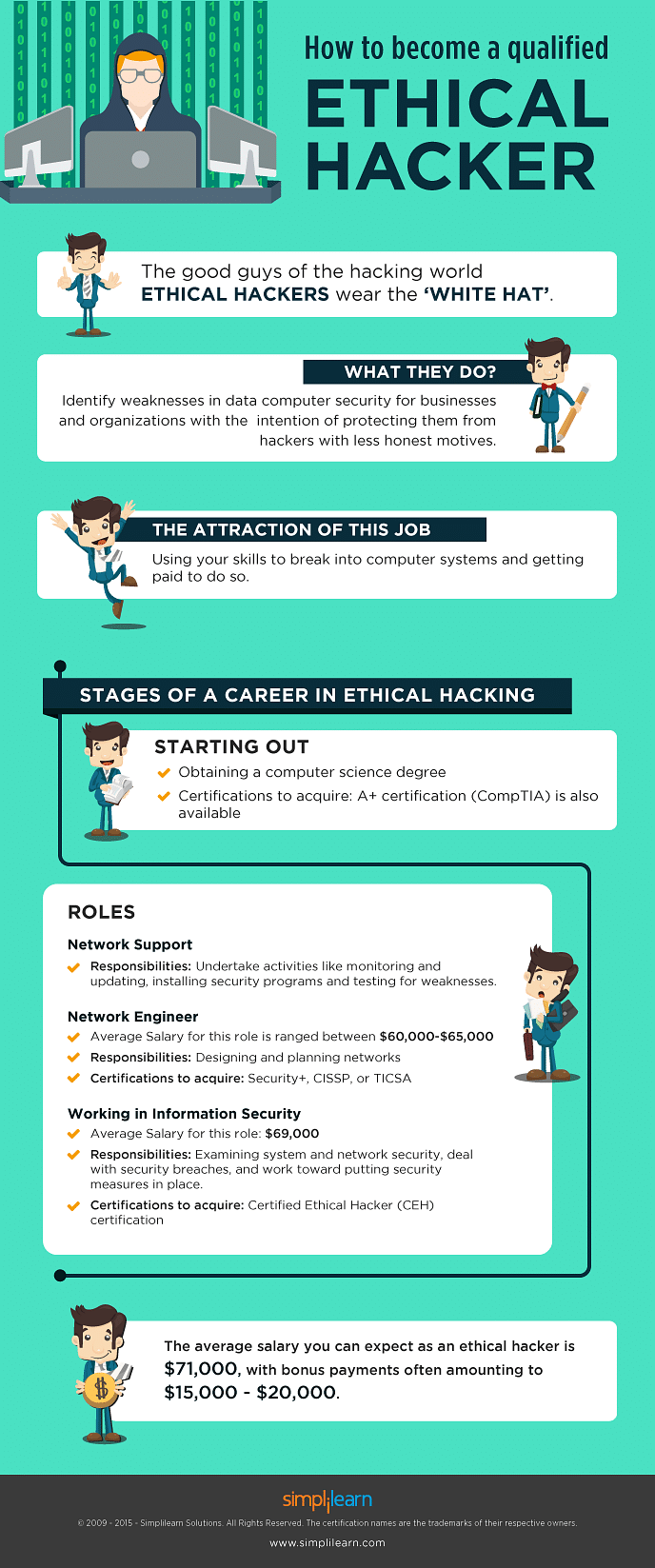
Credit: www.simplilearn.com
Staying Updated
Staying updated is crucial in the fast-paced world of ethical hacking. Cybersecurity threats evolve constantly. Ethical hackers need to stay ahead. Here’s how to keep yourself informed and ready for new challenges.
Following Industry News
Follow the latest cybersecurity news. Subscribe to reputable blogs and news websites. Join forums like Reddit and Stack Overflow. Participate in discussions to gain insights. Some useful sources include:
- Krebs on Security
- Dark Reading
- The Hacker News
Stay active on social media. Follow cybersecurity experts on Twitter and LinkedIn. This keeps you updated on emerging threats and solutions.
Continuous Learning And Development
Never stop learning. Enroll in online courses to expand your skills. Platforms like Udemy, Coursera, and Cybrary offer excellent courses. You can learn about:
- Penetration Testing
- Network Security
- Cryptography
Consider earning certifications. They validate your skills and knowledge. Some valuable certifications include:
| Certification | Provider |
|---|---|
| CEH (Certified Ethical Hacker) | EC-Council |
| OSCP (Offensive Security Certified Professional) | Offensive Security |
| CISSP (Certified Information Systems Security Professional) | (ISC)² |
Practice your skills regularly. Use platforms like Hack The Box and TryHackMe. They offer real-world scenarios for hands-on practice.
Frequently Asked Questions
What Is Ethical Hacking?
Ethical hacking involves identifying and fixing security vulnerabilities. Ethical hackers use their skills to protect systems. They help organizations stay secure.
How To Start With Ethical Hacking?
Begin with learning networking fundamentals. Study programming and cybersecurity basics. Gain hands-on experience through labs and challenges. Earn certifications like CEH.
Which Tools Are Used In Ethical Hacking?
Common tools include Nmap, Metasploit, and Wireshark. These tools help in scanning, exploitation, and packet analysis. Learning these tools is crucial.
Is Ethical Hacking Legal?
Yes, ethical hacking is legal. It requires permission from system owners. Unauthorized hacking is illegal and punishable by law.
Conclusion
Starting with ethical hacking in 2024 opens many opportunities. Equip yourself with the right tools and knowledge. Stay updated with the latest trends and practices. Ethical hacking is a rewarding field with great potential. Dive in, practice regularly, and make a positive impact on cybersecurity.
Your journey begins now.


Leave a Reply