

A Cybersecurity Risk Assessment evaluates potential threats to an organization’s information systems. It identifies vulnerabilities and assesses their impact on data security.
What is a Cybersecurity Risk Assessment:Cybersecurity is a growing concern for businesses of all sizes. Organizations face numerous threats, including data breaches, malware, and insider threats. A Cybersecurity Risk Assessment is crucial in understanding these risks. It provides a structured approach to identify, evaluate, and prioritize potential vulnerabilities.
By assessing risks, companies can develop effective strategies to mitigate them. This proactive measure not only protects sensitive data but also ensures regulatory compliance. A thorough assessment empowers organizations to allocate resources wisely and improve their overall security posture. Investing in a robust risk assessment can save time and resources in the long run.
Introduction To Cybersecurity Risk Assessment
A cybersecurity risk assessment is a crucial process. It helps organizations identify and manage potential security threats. By evaluating risks, businesses can protect their data and systems effectively.
This assessment is essential for creating a secure environment. It helps in understanding vulnerabilities and their potential impact. Organizations can prioritize their resources better with this knowledge.
The Importance Of Identifying Threats
Identifying threats is vital for any organization. Understanding risks allows companies to:
- Protect sensitive information.
- Prevent data breaches.
- Ensure compliance with regulations.
- Build trust with customers.
Failure to identify threats can lead to severe consequences. Organizations may face financial losses, legal issues, and reputational damage.
Regular assessments keep security measures up to date. They help adapt to new threats in the ever-evolving digital landscape.
Key Components Of An Assessment
Cybersecurity risk assessments have several key components:
- Asset Identification: Recognize critical assets such as data and hardware.
- Threat Analysis: Evaluate potential threats to these assets.
- Vulnerability Assessment: Identify weaknesses in systems.
- Impact Analysis: Assess the potential damage from threats.
- Risk Evaluation: Determine the likelihood and impact of risks.
Each component plays a significant role in the assessment process. Together, they help create a comprehensive risk profile for the organization.
| Component | Description |
|---|---|
| Asset Identification | Identify valuable data and resources. |
| Threat Analysis | Examine potential threats to assets. |
| Vulnerability Assessment | Spot weaknesses in systems and processes. |
| Impact Analysis | Evaluate damage from possible threats. |
| Risk Evaluation | Assess likelihood and impact of risks. |
Types Of Cybersecurity Risks
Understanding the types of cybersecurity risks is crucial for any organization. Different risks can affect systems, data, and users. Identifying these risks helps in implementing effective security measures.
Common Cyber Threats
Common cyber threats include various attacks that target networks and devices. Here are some prevalent ones:
- Malware: Malicious software that can damage systems.
- Phishing: Fraudulent emails that trick users into sharing sensitive data.
- Ransomware: A type of malware that locks files until a ransom is paid.
- DDoS Attacks: Overloading a network with traffic to disrupt services.
- Insider Threats: Current or former employees who misuse access to data.
Emerging Risks In The Digital Age
The digital age brings new challenges in cybersecurity. Here are some emerging risks:
- IoT Vulnerabilities: Devices connected to the internet can be exploited.
- Cloud Security Issues: Storing data in the cloud raises concerns about breaches.
- AI-Powered Attacks: Cybercriminals use artificial intelligence for more sophisticated attacks.
- Supply Chain Attacks: Targeting third-party vendors to access larger networks.
| Risk Type | Description |
|---|---|
| Malware | Software designed to harm or exploit devices. |
| Phishing | Tricks users into providing personal information. |
| Ransomware | Files are locked until a ransom is paid. |
| DDoS | Disrupts services by overwhelming networks. |
| Insider Threats | Employees misuse their access to sensitive data. |
| IoT Risks | Connected devices can be hacked. |
| Cloud Security | Data stored online can be vulnerable to breaches. |
| AI Attacks | AI techniques used for advanced cyberattacks. |
| Supply Chain | Third-party vendors can be exploited to attack main networks. |
Steps In Conducting A Risk Assessment
Conducting a cybersecurity risk assessment is crucial. It helps identify potential threats to your organization. Following specific steps ensures a thorough evaluation. Let’s explore these steps in detail.
Identifying Assets
First, identify your organization’s assets. Assets can include:
- Data: Customer information, financial records
- Hardware: Computers, servers, and routers
- Software: Applications, operating systems
- Personnel: Employees and their roles
Use a table to list each asset with its value:
| Asset | Value |
|---|---|
| Customer Data | High |
| Company Servers | Medium |
| Software Licenses | Medium |
Determining Threats And Vulnerabilities
Next, identify threats and vulnerabilities. Consider the following:
- Threats: Cyberattacks, natural disasters
- Vulnerabilities: Outdated software, weak passwords
Use an ordered list to categorize them:
- Malware attacks
- Phishing attempts
- Insider threats
Assessing Impact And Likelihood
Finally, assess the impact and likelihood of each threat. Ask these questions:
- What would happen if the threat occurs?
- How likely is this threat?
Use a simple table to categorize risks:
| Threat | Impact | Likelihood |
|---|---|---|
| Data Breach | High | Medium |
| Ransomware Attack | Critical | High |
| Insider Threat | Medium | Low |
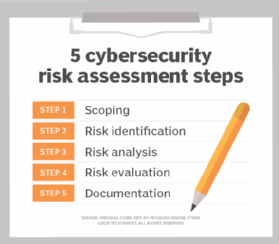
Credit: www.techtarget.com
Tools And Techniques For Risk Analysis
Cybersecurity risk assessments rely on various tools and techniques. These help organizations identify and manage risks effectively. Proper analysis enhances security measures, reduces vulnerabilities, and protects sensitive data.
Automated Assessment Solutions
Automated tools streamline the risk assessment process. They save time and increase accuracy. Here are some common automated assessment solutions:
- Vulnerability Scanners: Identify weaknesses in systems.
- Threat Intelligence Platforms: Gather data on potential threats.
- Security Information and Event Management (SIEM): Monitor and analyze security events.
- Compliance Management Tools: Ensure adherence to regulations.
These tools provide quick insights. They help prioritize risks based on severity. Organizations can address critical issues first.
Manual Assessment Strategies
Manual assessments require human expertise. Teams evaluate risks through various methods. Below are key strategies:
- Interviews: Talk to staff about security practices.
- Document Reviews: Examine policies and procedures.
- Risk Workshops: Collaborate with teams to identify risks.
- Scenario Analysis: Consider potential attack scenarios.
Manual strategies offer in-depth understanding. They capture nuances automated tools might miss. Combining both methods enhances overall risk analysis.
Interpreting Risk Assessment Outcomes
Understanding the results of a cybersecurity risk assessment is crucial. It helps organizations identify, evaluate, and manage potential threats. Clear interpretation guides decision-making and prioritizes actions.
Understanding The Risk Matrix
A risk matrix visually displays the level of risk. It combines the likelihood of a threat and the impact it may have. The matrix typically consists of rows and columns.
| Likelihood | Impact</ |
|---|